What if the biggest obstacle to your AI strategy isn’t the algorithm, but the 20-year-old software your team is forced to use every day?
Agility requires not just a willingness to adopt new strategies like AI, but also the courage to dismantle the legacy systems that hold your people and processes captive.
Today, we’re going to talk about the hidden costs of outdated technology. While many leaders are focused on implementing the next generation of AI, new research suggests that the legacy systems still running in the background are not just inefficient—they’re actively eroding employee morale, productivity, and could even be a major factor in employee turnover.
To help me discuss this topic, I’d like to welcome, Matt Healy, Sr. Director, Product Strategy & Marketing at Pega.
About Matt Healy
Matt Healy, Senior Director of Product Marketing, leads product marketing and strategy for Pega Platform. He helps engage with enterprises to bring new solutions to life that enable faster legacy transformation, accelerated development, AI & automation at scale to unlock business agility, operational efficiency, and developer effectiveness.
Matt Healy on LinkedIn: https://www.linkedin.com/in/mattbhealy/
Resources
Pega provides the leading AI-powered platform for enterprise transformation. The world’s most influential organizations trust Pega’s technology to reimagine how work gets done by automating workflows, personalizing customer experiences, and modernizing legacy systems. Since 1983, Pega’s scalable, flexible architecture has fueled continuous innovation, helping clients accelerate their path to the autonomous enterprise. Learn more at Pega.com
See the research from Pega mentioned on the show: https://www.pega.com/about/news/press-releases/new-research-uncovers-hidden-toll-ineffective-workplace-technology
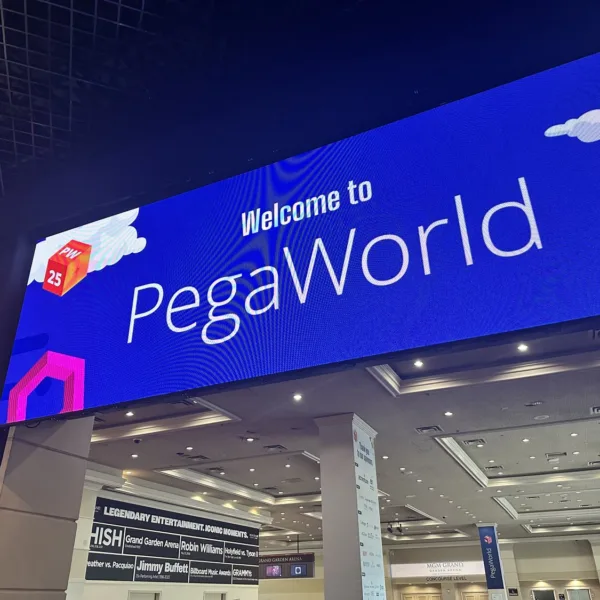
Also make sure to register for PegaWorld 2026, June 7-9 in Las Vegas, where the future of AI-led business will be built. Learn more and register here: https://www.pega.com/events/pegaworld
Drive your customers to new horizons at the premier retail event of the year for Retail and Brand marketers. Learn more at CRMC 2026, June 1-3. https://aglbrnd.co/r/d15ec37a537c0d74
We’re proud to be a media partner for #MAICON26 – Oct. 13-15! Learn how AI can power your marketing and business and help you grow smarter. Use code AGILE150 to save! https://aglbrnd.co/r/7fe458ced0f04658
Enjoyed the show? Tell us more at and give us a rating so others can find the show at: https://aglbrnd.co/r/faaed112fc9887f3
Connect with Greg on LinkedIn: https://www.linkedin.com/in/gregkihlstrom
Don’t miss a thing: get the latest episodes, sign up for our newsletter and more: https://aglbrnd.co/r/35ded3ccfb6716ba
Check out The Agile Brand Guide website with articles, insights, and Martechipedia, the wiki for marketing technology: https://www.agilebrandguide.com
The Agile Brand is produced by Missing Link—a Latina-owned strategy-driven, creatively fueled production co-op. From ideation to creation, they craft human connections through intelligent, engaging and informative content. https://www.missinglink.company
Transcript
Greg Kihlstrtöm: What if the biggest obstacle to your AI strategy isn’t the algorithm, but the 20-year-old software your team is forced to use every day? Agility requires not just a willingness to adopt new technologies like AI, but also the courage to dismantle the legacy systems that hold your people and your processes captive. Today, we’re going to talk about the hidden costs of outdated technology. While many leaders are focused on implementing the next generation of AI, new research suggests that the legacy systems still running in the background are not just inefficient, they’re actively eroding employee morale, productivity, and could even be a major factor in employee turnover.
Pega provides the leading AI-powered platform for enterprise transformation. The world’s most influential organizations trust Pega’s technology to reimagine how work gets done by automating workflows, personalizing customer experiences, and modernizing legacy systems. Since 1983, Pega’s scalable, flexible architecture has fueled continuous innovation, helping clients accelerate their path to the autonomous enterprise. Learn more at pega.com.
To help me discuss this topic, I’d like to welcome Matt Healy, Senior Director, Product Strategy and Marketing at Pega. Matt, welcome to the show.
Matt Healy: Thanks, Greg. Thanks for having me.
Greg Kihlstrtöm: Yeah, always always good to see you. So, yeah, looking forward to this this topic here. Before we dive in though, why don’t you give a little background on yourself and your role at Pega?
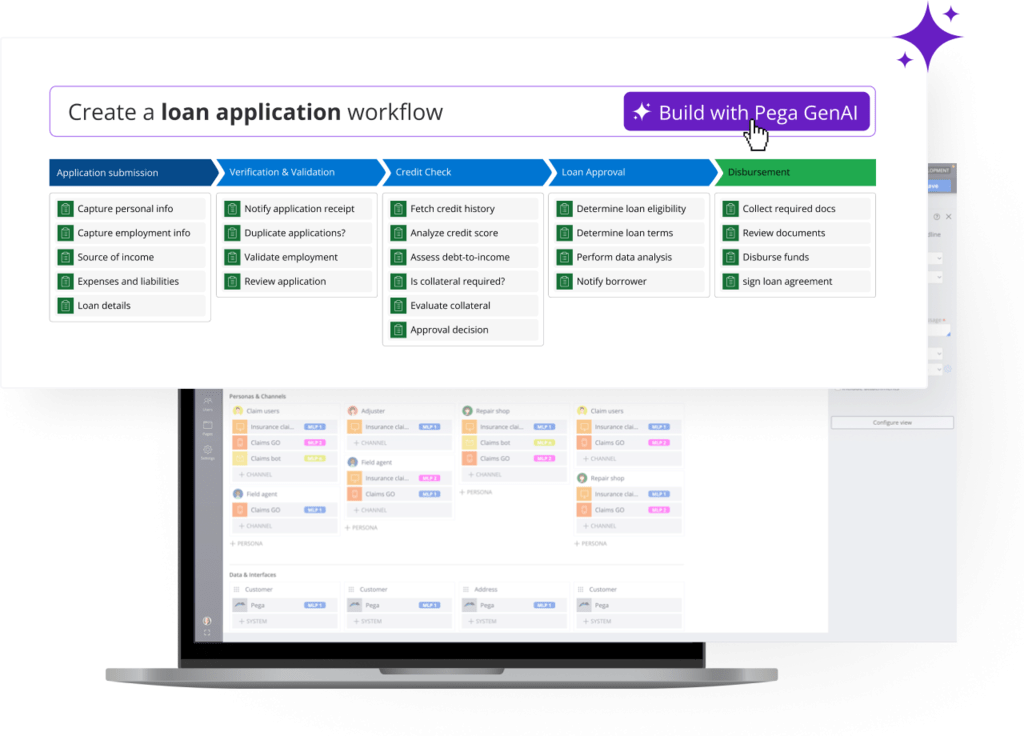
Matt Healy: Yeah, sure. So, as you mentioned, I help out with the strategy and the go to market for our Pega platform. so that includes, you know, helping think about how we are enabling enterprises around, you know, building enterprise applications faster using AI across the software development lifecycle, and then helping them automate their back-office processes, their customer service workflows, now increasingly through the use of agentic AI. and, you know, as we’re going to dive in, a lot of what we’re doing as well is helping enterprises really accelerate the transformation process through those sort of two lenses, you know, and thinking about getting off of legacy systems in the in the mix there.
Greg Kihlstrtöm: Yeah, yeah, and we’ll we’re definitely gonna dive into that quite a bit and and, you know, one of the things so, Pega recently released some research and we’ll talk about that a bit here. And the research highlights a a pretty major disconnect that leaders are chasing AI innovation, certainly we talk about a lot on this show, I think everyone talks about it many hours of of many days. while they’re chasing this AI innovation, you know, employees are still struggling with frustrating legacy systems, right? So, how, you know, from a strategic perspective, how does this technology debt undermine that company’s broader and and strategic transformation goals?
Matt Healy: You guys talk about AI on this podcast?
Greg Kihlstrtöm: Yeah, you know, surprise surprise.
Matt Healy: I’m glad you. Okay, you’re the one. no, yeah, absolutely. So, you know, if you zoom out and you think about the the broader transformation goals, and legacy’s impact, right? That this has been the case where legacy has been an anchor on really dragging down transformation opportunities and the execution for decades probably, right? At least many, many years. and the conversation, you know, to this point has been around like how can we accelerate to the cloud, how can we accelerate to microservices, how how can we improve the customer experience and get to digital, right? so like the imperative around getting off of legacy has always been there. I think that that AI now increases some of the urgency where if your data is trapped in on-prem, databases, or it’s trapped in proprietary data data structures, whatever it may be, you’re just unable to unlock, you know, the the sort of fuel that you need to power AI-driven transformation now. so there’s all the same imperatives around getting off of legacy systems that have always been there, customer experience, automation, you know, overall cost and maintenance and operations. And now this just adds more fuel to the fire. the good news is, I think that today, where we sit, AI is not just the urgency to get off of legacy systems. It’s not increasing just that perspective of it, but it’s also helping provide a solution or a path forward. So where yesterday or years ago, it would take you years to get off of a legacy system because you, you know, needed to understand what’s in there, you needed to translate that into your future state goals, you needed to then, write down your sort of prioritization about how you’re going to, by piecemeal pick out different parts of that legacy system. Then you need to build the application, you need to test it, blah, blah, blah, blah, blah. And that that’s all manual back in the day. Today, AI can offload a lot of that work and that’s really part of what we’re focused on here is accelerating the transformation journey, by using AI to help you understand your legacy systems, reimagine them and then deploy them as new systems in the cloud.
Greg Kihlstrtöm: Yeah. Well, and and there’s lots of reasons to do that, of course. I mean, you know, there there’s a lot of, you know, what I would call business goals and and customer goals even around that. But there’s also, you know, the the research states over a third of employees would consider leaving their jobs due to poor technology. So there’s an employee experience component here. And, you know, what I think we all know is, you know, unhappy employees lead to unhappy customers. And, you know, it’s it’s that that that that effect there. So, you know, how should leaders reframe this from legacy being solely an IT issue to a critical business risk that impacts things like talent retention and and even competitive advantage?
Matt Healy: Yeah, absolutely. I mean, everyone talks about how the expectations of consumers have shifted over the years, right? Towards away from like passing on manual documentation and emails and whatever towards digital, self-service, proactive, preemptive, simple, guided. That’s what consumers expect. The funny thing that, you know, maybe comes up less is like those consumers also work somewhere.
Matt Healy: Like, I and like, I work, I work at a company. I also engage with companies, you know, to get services done. Like, I expect banking to be simple. I expect, you know, insurance to be simple, et cetera, et cetera. So when I come into work and then I log in to, I don’t actually do this at Pega, but like I log into a terminal-based mainframe application. Right? That’s just completely disconnected from my life outside of work. And, you know, having to make that shift and, you know, to to more manual, platforms, to less guided platforms, less intuitive, less accessible, is just jarring. So, you know, as you mentioned, this is really a disgruntling for an employee. And I think part of that is, you know, some of what we found is, around 50% of employees said that their like their, not their legacy, but their their tech stack that they’re given, the platforms that they’re given, don’t allow them to be their best. It doesn’t allow them to do their best work, which I think just leaves a lot of people unfulfilled, frustrated, which then leads to retention. So, you know, enterprises end up in this sort of churn state, and then when they do bring someone new in, it takes a long time for them to get up to speed. How can you expect to bring in like a new college graduate into a place where they have to hop across 12 different systems and they’re each a different technology type and some of them were written back in the 1980s or 1990s. It’s just infeasible. So, it’s a it’s a sort of, it’s just a a snowball effect that they have going.
Greg Kihlstrtöm: Yeah. Well, and I I think a lot of organizations have tried to solve this as a training issue as well. So, you know, if if they just knew how to use it better, then, you know, they’d be happy and, you know, all all that stuff. But, you know, the the the research certainly shows that it, you know, I’m sure that helps. You know, it helps to to have mastery over over what you’re doing, but it’s not just training. It’s it’s a performance and it’s a usability problem, right? And so, you know, when an organization makes that decision to modernize, what, you know, what what steps should they take to replace, that, you know, what formerly was friction with efficiency, especially when in, you know, in in the enterprise, there is no like rip and replace. Like there’s everything’s everything’s going to happen in phases, even if it’s quick phases. You know, so how, you know, what what are some practical steps that they should take knowing that it’s a multi-step phase, let’s just say?
Matt Healy: Yeah, definitely. And this also kind of gets to where AI has changed the paradigm. So my answer a couple years ago would have been way different. But today, I you know, I think first step number one is understanding what you’re doing today and what’s in your existing platforms. so with AI, we can now, you know, take in all of the source code. We can take in the sort of user manuals that are provided to to someone who’s actually leveraging one of these systems. We can take in even videos of a user leveraging the system in their day to day and just get a sort of analysis of, all right, what are the what are the end-to-end processes in here? you know, how does it conform to best practices? Where are the opportunities to optimize? What’s the impact of maybe poor experiences that are going on these platforms? And just give leaders, you know, sort of an understanding, a an independent understanding of, you know, what’s the experience, where do things fall apart and and allow them to sort of think about next steps. And then, you know, from there, AI can really help take a lot of those next steps and, not just sort of rebuild what you have today into a newer technology, which is, you know, some of the older approach, which just, all right, I’ve understood my source code as it exists today that might be in Cobal. Let me rebuild it in Java and but not change anything about how it works. what you can do now with AI is take the concepts, take the processes, take the regulations, take the business logic, and actually reimagine everything that’s being run through it to deploy an optimized process, an optimized experience, that, you know, streamlines and automates a lot of what was previously done manually. so that’s sort of how we approach it, but it definitely starts with that overall understanding, which you can do at a sort of portfolio level, and then pick the the sort of best places to to move forward with that next approach.
And of course, it’s while there’s often ambitious goals in, you know, in the transformation, you know, a a lot of the workers in in your survey cited rather simple things like automation of repetitive tasks as a key need. So, you know, while there’s that that longer-term vision and and things being, being implemented, how can leaders strategically deploy AI to, again, not just achieve those those far-off things, but solve some really practical tools for, you know, reasons we already discussed, the morale, the, you know, all of that stuff.
Matt Healy: Yeah, definitely. I this again like, you know, maybe I’m too much of a pragmatist, but, my downfall, too pragmatic. but, this is again where like I like to start with visibility. You know, leveraging mining tools, some like workforce intelligence type tooling to understand like what are people doing? I get like there are going to be the squeaky wheels, who complain about certain parts of the process and it’s like, yeah, totally. That’s good input. But let me see what’s going on on the ground. What are the clicks that they’re making? What are the sort of like long poles in assignment processing that are actually happening? Just to have that understanding. And then, you know, I know AI is all the rage and, agents are very capable. So it might end up being that like AI is the solution to the problem, and I think increasingly so it will. But it’s not the only solution to the problem. So it also is really important to sort of understand the the the problem at hand and really think through like what’s the best tool for the job. And it might be some more deterministic approaches, or maybe maybe AI is is the solution there. But, you know, you got to think through independently before you just get to, hey, we need to deploy AI here to, deliver on our strategic imperatives or whatever it may be.
Greg Kihlstrtöm: Right, right. Yeah. and so let’s talk a little bit about how we measure then. So, you know, the the report also, you know, just it it it details feelings of, you know, frustration, exhaustion, demotivation, you know, things that are palpable when you’re in the room with someone but often hard to quantify. And, yet, you know, we we know they have a real business cost due to churn and and some of the things that you mentioned before. So, you know, beyond things like uptime and and support tickets, what what are metrics that leaders should be tracking to measure some of this, you know, impact of of modernization on the employee experience?
Matt Healy: Yeah, I think, like one really good thing to look at that I know, increasingly I’ve heard enterprise leaders looking into in the in the talks I’ve had is how specialized are their various teams? and that’s a good indicator to complexity of their work and complexity of their systems. so, you know, take a look and find out like if a customer service issue comes in of a certain type, based on its characteristics, could it go to 12 different teams? Because they’re the only people who are sort of skilled up to handle it and to know the various codes in the systems that they need to look for, the various lookups. That’s a that’s an indicator that, hey, it’s time to to maybe simplify a little bit. It’s time to to rationalize. And I think, you know, that also unlocks some really tangible business benefits as you can think about, you know, employee fungibility and generalization and being able to, you know, make sure that you’re you always have someone available, to deliver on the work that you have, regardless of the type of work. so that’s that’s a really good one. I think it’s also, you know, some of the more apparent ones like, how many applications does an employee use every single day? How many times are they switching across them? obviously there’s productivity loss involved with that. There’s just training time that’s involved with that. So just getting an understanding of what what does an employee’s day look like and then you can sort of use that as grounding in terms of how can you simplify it.
Greg Kihlstrtöm: Yeah, yeah. And then so from from the CFO’s perspective, let’s say, modernization project, sound you know, sounds expensive, sounds like a, you know, a massive cost center, right? So, how do you build the business case? I mean, you know, we’ve talked about a lot a lot a lot of proof points here. You know, how do you connect investments in, you know, things like better internal technology to tangible outcomes like some of the things you mentioned, you know, productivity, reduced errors, lower turnover, you know, how how does that case get made?
Matt Healy: Yeah, I mean, I think AI has changed both the numerator and the denominator of the ROI calculation. so, you know, the case, the business case has to be made in in a holistic sense. In that, there’s the apparent costs of your, you know, legacy system. There’s the operations, the maintenance, the support, the things that show up as line items. And then there’s the less apparent costs. And, you know, really the opportunity cost in that if you got off of the system, what could you do in terms of driving new business, in terms of driving growth, in terms of driving personalization and automation? So you got to take all of that into account to to really calculate, you know, the benefit. And then the cost is, you know, something that used to be if you were looking at it like if you were to get off of a mainframe, and we had a great, presentation, I’m going to plug a little bit, by a client at AWS reinvent. Unan insurer, and we had, one of the VPs of IT that we’ve been working with talk about his journey around mainframe modernization. And, he was like, hey, yeah, we’re doing disability claim modernization trying to get it off of the mainframe into the cloud. And we tried this about, you know, a couple years ago, and we had SIs come in and give us quotes. And they came in and they were like, hey, this is going to cost you, you know, $25 million and the project is going to take seven years. And this was pre-AI. And now with, you know, naturally our approach, but, you know, now with the AI-driven approaches, he, was able to get from Cobal to a working application in the cloud for their disability claims in 90 days.
Matt Healy: So the the the denominator of these calculations has shifted dramatically. so it’s really important to like look at, you know, the latest and greatest approaches to to modernization because I think a lot of these ROIs have been unlocked, which will hopefully, you know, allow people to start to get off these legacy systems faster.
Greg Kihlstrtöm: Yeah, I mean, that’s not even like seven years to seven months, that’s seven years to 90 days, which geez, yeah, that’s that’s amazing. So, you know, as as as these transformations happen and and they’re going to happen more and more, you know, as as these technologies as AI is is, adopted, what does the day-to-day experience of those employees that, you know, used to be on the mainframe, used to be using all, you know, all those tools and the the repetitive tasks. You know, what what does it start to look like and, you know, how does their role change when technology is more of a partner rather than an obstacle to getting things done?
Matt Healy: Yeah, I would also, I would be a fool if I made any like strong predictions of where this is going, right? Just given how fast, the the technology space is moving right now. I I do kind of envision that like everyone will have AI assistance, work will be a lot more of a conversational manner, you know, just engaging through a some sort of agent fabric, with, a ton of AI under the hood, which can actually execute, on what you’re trying to get done. So I think we will all sort of be naturally lifted out of platforms and systems and be moved towards guiding AI in doing a lot of work. so that’s that’s where I see it going. I think, you know, there’s obviously a long way to towards that. that’s going to be a a little bit of a journey from where people are. I think the thing that we’ll probably see, you know, on the way to that journey is just simplification and, a little more fungibility as I mentioned. So, you know, I was I was working with a client who was getting off of the mainframe and, they have people in their back office who, have been working in the mainframe for 30 years and they know like all of the tips, all of the tricks, they know every single code they have to pass in. And, you know, I think we’ll see a lot less of that as there’s turnover in the industry and as people’s expectations shift. So, it’ll start with simplification and then I think we’ll see the emergence of AI sort of driven work and assistance, over the next couple years.
Greg Kihlstrtöm: Yeah, yeah, I love it. Well, Matt, thanks so much for joining today. Got two last questions before we wrap up here. If we were having this interview one year from today, what is one thing that we would definitely be talking about?
Matt Healy: I I hope that in a year, right now the conversation is very much around how quickly can we adopt AI at scale, which is good. Everyone’s trying to cut costs. Everyone’s trying to stay ahead, and, you know, be the disruptor, not the disrupted. I get it. I think in a year, the conversation will shift to how can we provide the human touch.
Matt Healy: How can we best utilize our people in the moments when our customers need it and be really intelligent about that, so we don’t appear, we don’t show up like a robot wasteland to our customers so that’s that’s the conversation I expect. That’s kind of the conversation I hope to be having in.
Greg Kihlstrtöm: Well, we’ll have to have you back on to to have that conversation then.
Matt Healy: Absolutely.
Greg Kihlstrtöm: Well, and last question for you, what do you do to stay agile in your role and how do you find a way to do it consistently?
Matt Healy: I get hands on. I make sure I read about new capabilities, new advancements and I make sure that, I actually see if they work and make the make the conclusion for myself.