
The AI Marketing Operating Model: Twelve Tools, One Launch | Led by Greg Kihlström

The AI Marketing Operating Model: Twelve Tools, One Launch | Led by Greg Kihlström
A Brand Visibility for Agentic Commerce Workshop That Shows You Where AI Agents Are Quietly Excluding Your Brand
A Half- or Full-Day AI Marketing Workshop That Walks an Entire Campaign — Research to Reporting — Through a Modern, AI-Native Stack
Most AI training in marketing right now answers the wrong question. Teams keep asking which tool should we buy? when the real question is what does our team look like once we’ve bought it? The brands pulling ahead aren’t the ones with the most AI subscriptions — they’re the ones that have rewired how a brief moves through research, creative, media, and reporting. The tools are the easy part. The operating model is the hard part, and it’s the part nobody’s teaching.
The AI Marketing Operating Model: Twelve Tools, One Launch is the AI marketing operating model workshop that closes that gap.
This is a single-day, hands-on session that takes a hypothetical brand from blank-page launch brief to live performance dashboard — using twelve AI tools across the full campaign lifecycle. Participants don’t watch one demo of one tool; they watch how Perplexity feeds NotebookLM, how NotebookLM feeds the brief in ChatGPT, how the brief feeds Canva and Jasper and Lovable, how Surfer and Performance Max and Zapier run the campaign, and how Zapier Agents and Claude close the loop with analysis and the next test. By the end of the day, the team has seen the integrated workflow that defines modern marketing.
Led by Greg Kihlström — host of The Agile Brand podcast (2x Signal Awards winner, top-ranked enterprise marketing podcast), named the #1 Global Thought Leader on Customer Experience for three consecutive years, and author of The Agile Brand Revisited and Marketing Technology Platforms — this workshop is built on his thesis that marketing is moving from campaign-led to system-led, and that the teams that thrive in this model aren’t the most creative — they’re the best-orchestrated.
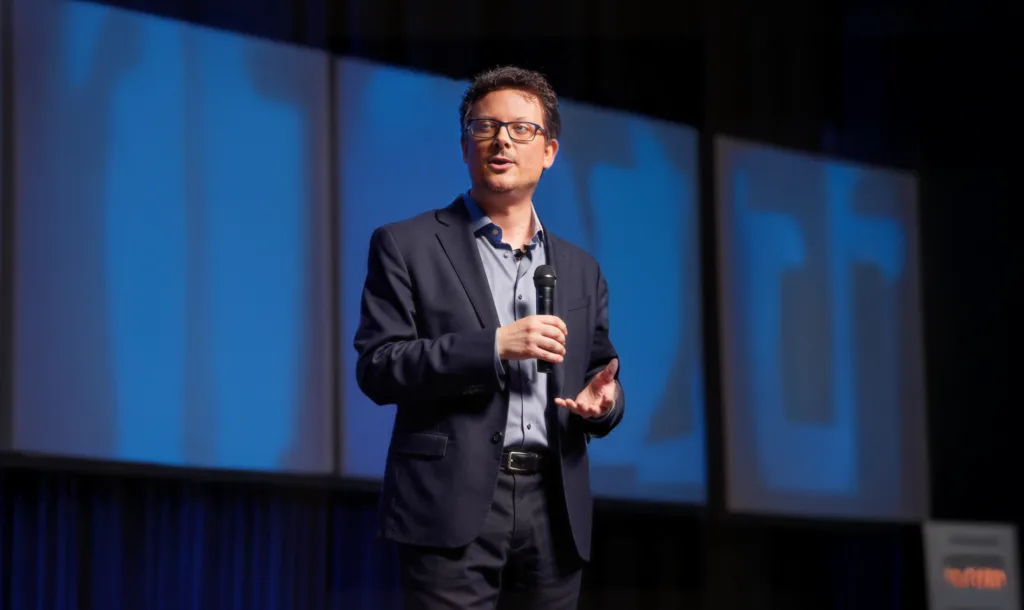
This workshop is led by Greg Kihlström, AI for marketing expert and workshop facilitator
What Your Team Will Learn
This is not a tool tour and it’s not an awareness session. It’s a working day that takes one launch — designed across six markets, twelve weeks, and a four-person team — and uses it to teach the integrated workflow your team will run going forward.
- The Five-Stage AI Marketing Workflow — Master the end-to-end model: Research & Strategy → Creative Brief → Campaign Creative → Performance & Launch → Learning & Analysis. Each stage has specific AI tools, specific handoffs, and specific outputs that feed the next.
- Hands-On Use of Twelve AI Tools — Work through live demos and applied exercises with Perplexity, Google NotebookLM, ChatGPT, SparkToro, Google Gemini, Canva AI, Jasper, Lovable, Surfer SEO, Google Performance Max, Zapier (Zaps + Agents), and Claude — not as isolated capabilities, but as a connected stack.
- The Three Mistakes That Stall AI Adoption — Recognize the failure patterns Greg sees most often: buying tools without rewiring workflows, treating AI as a content factory, and measuring AI by speed instead of quality. Learn the operating habits that avoid each one.
- Editorial Judgment as the New Core Skill — Understand why volume is no longer the bottleneck and selection is, why brand discipline matters more in an AI-native team rather than less, and how to define taste up front so AI scales the team’s standards instead of diluting them.
- Workflow Automation as the Competitive Moat — Build the working logic for connecting tools — using Zapier Zaps, agents, and LLM-powered handoffs — so the team’s advantage is in integration, not in any single license.
- A 30-Day Pilot Plan You Can Actually Run — Leave with the audit-then-pilot framework: Week 1 maps current workflows and picks three candidate use cases, Week 2 selects tools and trains one owner per workflow, Weeks 3–4 measure cycle time, quality, and adoption
Who AI Marketing Operating Model Workshop Is For
This is a full-stack workshop, built for the people responsible for how a marketing team actually runs — across research, creative, media, and analytics.
- CMOs, SVPs, and VPs of Marketing who need to redesign the team’s operating model around AI rather than bolt AI onto the old one
- Marketing Directors and Department Heads accountable for cycle time, output quality, and the unit economics of campaign production
- Brand and Content Leaders whose teams need a shared workflow across research, briefing, and creative — not a different tool for every step
- Demand Generation and Performance Marketing Leaders managing the handoff between creative production and paid media, and looking to close the loop with AI-assisted analysis
- Marketing Operations and MarTech Leaders responsible for the plumbing between tools and ready to make workflow automation the team’s actual moat
- Cross-Functional Launch Teams — small, integrated squads (think 4–10 people) responsible for shipping campaigns end-to-end and looking for the working model that lets them punch above their headcount
For Marketing Leaders: What Your Team Walks Away With
If you’re a CMO, SVP, or VP of Marketing, here’s what this workshop delivers to your org.
The hardest pitch you’ll make this year is the one for budget against a loss you can’t see. AI-mediated discovery is reshaping who gets considered at all — and the brands being filtered out have no campaign report to point to, no traffic anomaly to investigate, no obvious thing to fix. By the time the revenue impact lands, the structural advantage has gone to a competitor who started auditing their catalog 12 months earlier. This workshop is built to put your team on the right side of that timeline.
What your teams will learn — and bring back to the business:
- A documented end-to-end workflow — your team returns with a five-stage operating model that names the tools, the handoffs, and the outputs at each stage. This is the artifact that turns “we’re investing in AI” into “here’s how the team actually runs.”
- A shared vocabulary across research, creative, media, and analytics — the workshop forces the conversation that rarely happens inside a marketing org: how each function’s AI use connects to the next. Your content team stops working in isolation from your demand gen team, who stops working in isolation from analytics.
- A 30-day pilot plan with three candidate use cases — instead of a 12-month transformation deck, your team comes back with a two-week sprint plan: workflows mapped, tools picked, owners assigned, KPIs defined. The first measurable win lands inside the quarter.
- A framework for the right metrics — cycle time first, output quality second, ROI third. This sequencing is the difference between AI investments that stall (chasing ROI on day one) and ones that compound (proving cycle time, then scaling).
- A clear-eyed read on where you’re overspending — the workshop’s live walkthrough reveals which capabilities your team has already paid for in their existing stack, and where adding one more tool would actually move the needle. Most clients leave with a leaner stack, not a bigger one.
- An operating model that survives the next tool cycle — the specific tools will change. The workflow won’t. Your team learns to think in stages and handoffs, so the operating model holds up regardless of which platform launches the next agentic feature.
This is the workshop you book when “we need to do more with AI” needs to become “here’s the operating model, here’s the 30-day pilot, here’s the first win we’ll report at the next board meeting.”
Bring this workshop to your team →
For Marketing Teams: How to Convince Your Manager to Bring This Workshop In
If you’re a practitioner who knows your team needs this, here’s how to make the case.
You’ve probably had this experience: your team has access to AI tools, but the work hasn’t actually gotten faster. Briefs still take weeks. Creative review still bottlenecks. The reporting cycle still eats Mondays. Everyone agrees AI should be helping more — nobody agrees on how. Your manager has probably noticed too, but needs a credible, structured way to address it that isn’t another vendor demo or a generic AI keynote. This workshop is that credible option. Here’s how to frame it:
Use these talking points:
- “It’s an integrated workflow, not a tool tour.” Most AI training shows one tool deeply or many tools shallowly. This workshop shows twelve tools working together on one launch — which is what we actually need to learn.
- “It pays back in cycle time, not theory.” The workshop is built around a real launch scenario: four-person team, six markets, twelve weeks. We’d leave with the working model that compresses our own cycle times, not slideware.
- “It addresses our specific problem — the handoffs.” Our tools aren’t the issue. The issue is what happens between research and brief, between brief and creative, between creative and media. This workshop is specifically about those handoffs.
- “It’s led by Greg Kihlström.” He hosts the top-ranked enterprise marketing podcast, has authored 25+ books on marketing technology, and consults for Fortune 1000 brands on exactly this transformation. Not a generalist trainer.
- “We leave with a 30-day pilot plan.” Not a six-month transformation deck — a two-week sprint plan. Three candidate use cases, one owner per workflow, KPIs we can actually measure. The business case writes itself.
- “It avoids the traps we’re already at risk of hitting.” Buying tools without rewiring workflows. Treating AI as a content factory. Measuring on day one. The workshop names these explicitly so we don’t fall into them by accident.
Quick email template to send your manager:
Subject: AI workshop that’s actually about workflow, not just tools — worth 5 minutes?
I came across a full-day workshop from Greg Kihlström (host of The Agile Brand podcast) that walks an entire campaign launch through twelve AI tools end-to-end — research, brief, creative, media, and analysis as one integrated workflow. It ends with a 30-day pilot plan we could actually run on our own work.
Given that our tools aren’t the bottleneck — our handoffs are — I think this would meaningfully change our cycle times. Can I send you the details?
About the Workshop Leader: Greg Kihlström
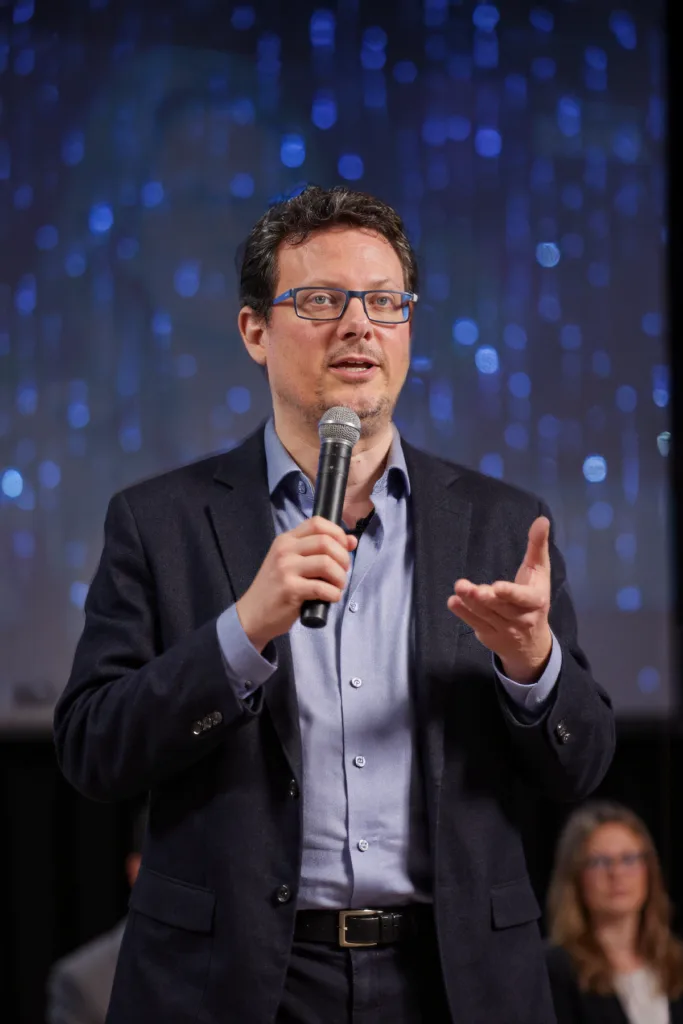
Greg Kihlström is one of the most recognized voices in marketing technology, AI adoption, and customer experience. He is:
- Host of The Agile Brand with Greg Kihlström® — the top-ranked enterprise marketing podcast and 2x Signal Awards winner
- Named the #1 Global Thought Leader on Customer Experience for three consecutive years
- Best-selling author of The Agile Brand Revisited, Marketing Technology Platforms, and House of the Customer
- Advisor and fractional Chief Digital Officer to leading enterprise brands
- Creator of The Agile Brand Guide®, Martechipedia™, and Stackalize™
Greg has delivered workshops and keynotes to marketing teams at Fortune 500 brands, agencies, and high-growth companies across North America and Europe.
Workshop Format & Logistics
- Format: Full-day immersive workshop (in-person or virtual), structured around the five-stage AI marketing workflow and a continuous launch scenario that threads through every demo
- Audience size: Optimized for cross-functional marketing teams; group sizes are flexible, with the most value delivered when research, creative, media, and analytics functions attend together
- Customization: Curriculum is tailored to your industry, current tech stack, team structure, and the specific launch or campaign scenario most relevant to your business
- Delivery: On-site at your offices, off-site at a venue of your choosing, or fully virtual — with hands-on exercises adapted for either format
- Outcomes: A documented end-to-end workflow, a curated 12-tool reference stack with the handoffs mapped, a 30-day pilot plan with three candidate use cases, and an action template covering owners, KPIs, and the traps to avoid
Ready to Rebuild Your Team’s Marketing Operating Model?
The marketing teams that win the next 24 months won’t be the ones with the biggest AI stack — they’ll be the ones whose workflow connects the stack they already have. Whether you’re a leader looking to redesign the operating model or a practitioner ready to make the case to your manager, this workshop is built to deliver an integrated workflow and a pilot plan you can run in two weeks.
Request workshop details and pricing →
Frequently Asked Questions
Who should attend this brand visibility for agentic commerce workshop? Brand and marketing leaders, e-commerce and digital directors, CMOs and VP-level marketing leaders, product information and data teams, and the SEO and generative search leads responsible for AI-era discovery. The workshop is calibrated to work for executive sponsors setting the roadmap and for the practitioners who own the structured data layer being evaluated.
Is this workshop available virtually or only in-person? Both. The full-day workshop can be delivered on-site at your offices, at a venue of your choosing, or as a fully virtual session — with the catalog diagnostic exercises adapted for either format.
What’s the difference between this workshop and an online course on generative search or AI commerce? This is a live, customized, full-day session led by the architect of the BVAC Framework, with hands-on diagnostic exercises run against your own SKUs and competitive set. Online courses teach concepts; this workshop produces a documented assessment of your brand’s actual exposure and a sequenced remediation roadmap.
Do participants need prior AI experience? No. The workshop is grounded in the structural mechanics of how AI agents read and evaluate catalogs — not in prompting or generative-AI fundamentals. What helps is familiarity with your own product data, feeds, and e-commerce infrastructure. Greg will get the team on the same conceptual footing on the agentic side.
How does this differ from the other workshops in the series? The AI for Marketers workshop is for content, social, comms, and CX teams getting up to speed on prompting and generative AI. Marketing Operations in the Age of Agentic AI is the advanced session for ops and MarTech leaders focused on autonomous workflow architecture. Brand Visibility for Agentic Commerce is the brand-and-catalog session focused specifically on whether AI agents can correctly identify, compare, and trust your products in the first place.
What deliverables do participants walk away with? The BVAC Framework with all eight dimensions applied to your own catalog, a documented assessment of where your brand is being silently excluded, a competitive visibility read against your specific set, a trust-signal-floor analysis, and a 90-day / 6–12 month / 12–24 month remediation roadmap sequenced by scoring dependency.
Will the workshop address marketplaces, retail media, and the role of third-party listings? Yes. A meaningful part of the diagnostic is identifying where an agent is currently citing a marketplace listing over your own site, and what that implies for your catalog, syndication, and marketplace strategy.
How is this workshop priced? Pricing depends on format, team size, and customization. Request a quote here.
Related Resources from The Agile Brand Guide®
- 🎧 The Agile Brand with Greg Kihlström® podcast — latest episodes on agentic AI and marketing operations
- 📚 Martechipedia™: Agentic AI — foundational definitions covered in the workshop
- 📚 Martechipedia™: Generative Engine Optimization and AI search terms
- 📖 How Marketers Can Use Agentic AI to Improve Marketing Operations — companion article on agilebrandguide.com
- 📖 BVAC advisory and consulting services