Is generative AI on track to become the biggest productivity unlock for marketers since the internet, or will it forever be stuck in endless pilot projects and one-off experiments?
Agility requires moving beyond isolated experiments and embracing the systemic redesign of core creative and marketing workflows. It’s about building the operational muscle to not just adopt new technology, but to integrate it into the very fabric of how your brand creates value.
Today, we’re going to talk about what happens after the initial hype cycle of generative AI. We’re moving past the novelty of prompting for images and into the far more complex challenge of operationalizing AI at enterprise scale. This isn’t just about adding a new tool; it’s about re-architecting the entire creative supply chain and redefining the role of human judgment in a world of content abundance.
To help me discuss this topic, I’d like to welcome Hannah Elsakr, VP of New GenAI Business Ventures at Adobe.
About Hannah Elsakr
Hannah Elsakr serves as Vice President of GenAI New Business Ventures at Adobe, where she leads efforts at the intersection of technology, creativity, and marketing. She launched Adobe Firefly Enterprise businesses, starting with Firefly Services for creative automation and Firefly Foundry, Adobe’s GenAI deep-tuning managed service, enabling brands to adopt commercially safe generative AI. Previously, she led Corporate Development and served as Chief of Staff to Adobe’s CEO and Chair, Shantanu Narayen.
Hannah is also Board President for the Adobe Foundation, which creates positive change through support for creative and digital literacy, social equity and opportunity, and active engagement in the communities where we live and work.
Hannah has experience leading global businesses in ecommerce & marketplaces, consumer products, SaaS, and advisory services. Prior to joining Adobe, she was the Vice President at eBay with P&L responsibility for eBay’s Canada, Latin America, and U.S. Exports businesses as well as business operations. Hannah previously held leadership roles at eBay, Del Monte Foods, Avon Products, McKinsey & Co., and J.P. Morgan.
Hannah holds a Bachelor of Science degree in applied mathematics with computer science from MIT and an MBA from Harvard Business School.
Hannah Elsakr on LinkedIn: https://www.linkedin.com/in/hannahelsakr/
Resources
Adobe: https://www.adobe.com
The Agile Brand podcast is brought to you by TEKsystems. Learn more here: https://aglbrnd.co/r/2868abd8085a9703
Drive your customers to new horizons at the premier retail event of the year for Retail and Brand marketers. Learn more at CRMC 2026, June 1-3. https://aglbrnd.co/r/d15ec37a537c0d74
Enjoyed the show? Tell us more at and give us a rating so others can find the show at: https://aglbrnd.co/r/faaed112fc9887f3
Connect with Greg on LinkedIn: https://www.linkedin.com/in/gregkihlstrom
Don’t miss a thing: get the latest episodes, sign up for our newsletter and more: https://aglbrnd.co/r/35ded3ccfb6716ba
Check out The Agile Brand Guide website with articles, insights, and Martechipedia, the wiki for marketing technology: https://www.agilebrandguide.com
The Agile Brand is produced by Missing Link—a Latina-owned strategy-driven, creatively fueled production co-op. From ideation to creation, they craft human connections through intelligent, engaging and informative content. https://www.missinglink.company
Transcript
#840: Adobe’s Hannah Elsakr on what happens after the hype: operationalizing AI at enterprise scale
Greg Kihlström: Is Generative AI on track to become the biggest productivity unlock for marketers since the internet, or will it forever be stuck in endless pilot projects and one-off experiments? Agility requires moving beyond isolated experiments and embracing the systemic redesign of core creative and marketing workflows. It’s about building the operational muscle to not just adopt new technology, but to integrate it into the very fabric of how your brand creates value.
Today, we’re going to talk about what happens after the initial hype cycle of Generative AI. We’re moving past the novelty of prompting for images and into the far more complex challenge of operationalizing AI at enterprise scale. This isn’t just about adding a new tool, it’s about re-architecting the entire creative supply chain and redefining the role of human judgment in a world of content abundance.
To help me discuss this topic, I’d like to welcome Hannah Elsakr, VP of Gen AI, New Business Ventures at Adobe. Hannah, welcome to the show.
Hannah Elsakr: Thank you, Greg. Thanks so much for inviting me here today.
Greg Kihlström: Yeah, really looking forward to this, this topic. Definitely top of mind for for many here. So looking forward to diving in. But before we do, why don’t you give a little background on yourself and your role at Adobe?
Hannah Elsakr: Yeah, sure. And, I, you know, I’m often surprised that folks don’t realize how much surface area Adobe actually covers. So we are in the area of creativity, productivity, and also customer experience. I hope some of you know obviously our beloved products like Photoshop and Premiere Pro on the creative side, Acrobat for document productivity, and also, Adobe Analytics and Experience Manager on the experience side. So, in my role, I really am quite privileged to have a role that marries the possibilities of technology as well as the enterprise responsibility. I love how you opened with moving beyond the hype cycle. So that’s really where I sit and I I do that work with the most iconic brands around the world, which we can talk about. You know, I’ve really have focused, in my career around transforming businesses with these emerging technologies, but really thinking about how we work those into our everyday workflows and our everyday life. So that’s what I focus my time on.
Greg Kihlström: Yeah. Sounds fun. So yeah, let’s let’s dive in here. And, you know, I want to start with what I refer to, and, you know, I I can’t help but use the analogy of like early days of the internet, and those of us that remember those days.
Hannah Elsakr: Yes.
Greg Kihlström: I think it feels familiar in in both good and and and challenging ways. but, you know, similar to that, you know, the last the last year or two, a lot of brands have been spending in really experimentation. You know, so AI tools becoming more mature, but organizations still trying to wrap their head around, you know, how how are we going to use this. Now, a lot of those same leaders that were experimenting are being asked, okay, where, you know, let’s let’s start seeing the ROI, right? They’re being asked from boards, they’re being asked from from their peers and and others. What’s the most important mindset shift to move from that AI pilot to AI as a core creative infrastructure?
Hannah Elsakr: I’m glad that you’re dating us with the internet. I I appreciate you opened that because, no, I was reflecting on that, you know, and, I’ll date myself, you know, when I was studying at MIT, the World Wide Web was becoming a reality. And of course, those were the mid 90s. A lot of the companies that were around then are not around now. And I I love that you put that parallel out there, which is we are in very early innings of what I would call a generational tectonic shift in technology, right? This is probably the fastest adopted one that we’ve seen, and we’ve been through mobile, we’ve been through social, we’ve been through the internet, but this one just the the curve of acceleration has gone up very high. And I think that is the challenge for the board room, as you said, and for, leaders, like many that I work with. So, you know, 99% of the Fortune 100 have actually used AI in an Adobe product already. So, back to people leaning in, they certainly are trying, and the question is, how are they moving from dabbling, or what I sometimes call the playground mode of experimentation, to a production grade mode? And the conversation with the C-suite execs have has definitely shifted. In 2023, when we also launched our Firefly brand of generative models, I think CFOs, CEOs were much more open to the idea of like, a thousand flowers blooming and experimenting. As we progressed in 24 and 25 and certainly now the board room conversations in 2026 are, show me the money, right? Show me the ROI and how am I going to put this into practice? The critical mindset shift that I think has to happen is away from this idea of the shiny new penny or the model fascination, to thinking about enterprise grade workflow transformation. I think that’s the main shift. We can we can dive more into it, but models are not the end game. They’re they’re just a facilitator in the infra, and what we really need to be thinking about is which workflow, and we can talk about creativity or marketing, which workflow are we trying to transform? and and then you have to think about the backdrop. I mentioned, you know, the companies that I work with, Coca-Cola, Nike, Mattel, you know, Gatorade, Pepsi, IBM. None of these companies can afford to get anything wrong on a global scale. So enterprise grade security, right? Protection of IP and IP agency, thinking about, transparency and and where that data is flowing. These are all must must-dos, right? Minimum bar type of things when you’re implementing AI.
Greg Kihlström: Yeah. Well, and and maybe let let’s unpack that a little bit from the from the workflow standpoint. So, you know, and and to go back to what you were saying, you know, the those whether it’s the at the board level, at the at the C level, asking for that measurable ROI, we’re not just talking about incremental efficiency gains. That that’s helpful and and often a pilot can can prove that out, but we’re talking about, you know, what what you what you referred to is really redesigning workflow. So maybe maybe can you can you paint the picture a little bit about let’s maybe use a creative workflow as as an example, you know, what is that what separates those companies that are that are getting those small gains from, you know, those that are really redesigning a creative workflow around AI?
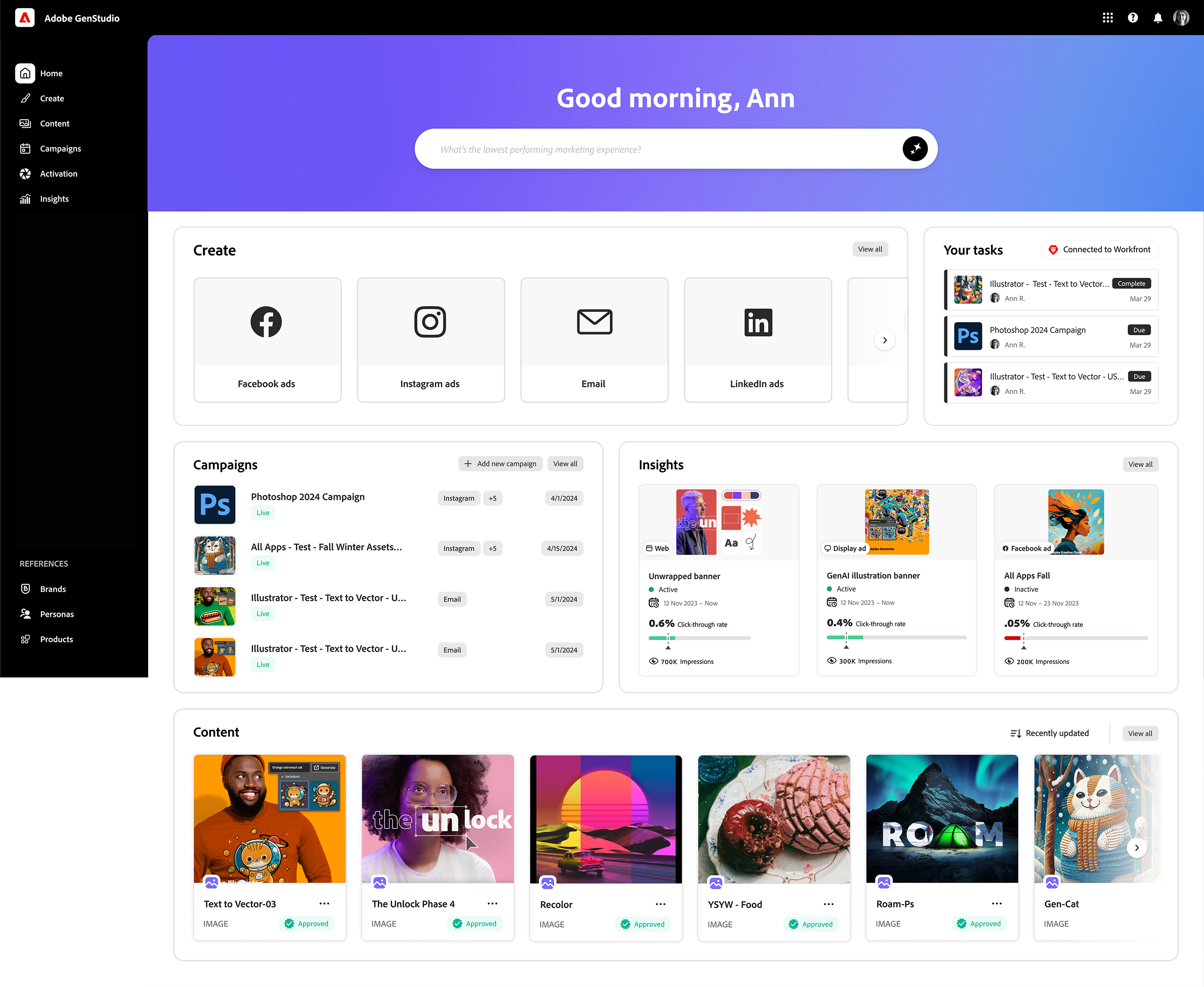
Hannah Elsakr: Yeah, and and I, you know, I don’t want to confuse incrementality with familiar. So I actually think some of the biggest gains are going to come from transforming well, I’ll call a familiar workflow. and and, you know, you and I haven’t exactly addressed this, but this is big change and change management means, you know, there’s there’s usually a change curve of adoption. The first thing is fear and rejection. Secondly, we we know, we try to adopt in the familiar before we get to really innovative, new breakout ways that you and I saw that with the internet, you know, and new business models, but start with the familiar. So, I would say, you know, you’ve mentioned creativity. Let’s if we think about creativity in the marketing workflow, the reality that a CMO is faced with today is they have to probably, they’re probably being asked to produce five times the amount of content. We we’ve run studies where the average CMO says, I’m being asked to do 5X more. At the same time, most of the CFOs are saying, you’re on a flat budget at best, maybe you’re on a down budget. And then we also add in the idea of content decay. with social, you know, the the rule of thumb used to be in the in in a year ago, two years ago, was, okay, that content is aged after about a week, right? After seven days, the ROI in that content approaches near zero. Now, the new studies that we’ve run and seen is engagement decay on something like an Instagram is in hours. So, in 19 hours, this is the last stat that I was given. You are at near zero. That content needs to be refreshed. So just think about, I call this like the the impossible math problem, right? With a with a null set answer. Unless, this is where AI steps in, I think. Responsible AI unlocks the ability to do this type of content at scale on brand within this real constraint of budgets that we all live in. So, if we take, I’ll I’ll give you Adobe’s own example. our, you know, our leadership team, our CEO is very much instilled in us a customer zero mindset. So we we drink our own champagne, on every product. And so when we launched the generative AI products in the Firefly family, our own, marketing team, I worked with them personally to to implement that. So for Black Friday, for instance, we normally do 50,000 assets in 30 languages, you know, I I won’t even count the number of sizes and and translations and localization that we have to go through. That was taking us probably 16 weeks or more from from brief to actual execution and push. And we in that process, I’ll just, you know, give you a side thing about waste is because we were so far from the moment of Black Friday, we would intentionally create waste around price points because we didn’t know which price point we would finally lock, and you can’t be downstream and trying to figure that out. So, we would create every price point that we possibly might want, in the 16-week time frame. So, when we implemented and we had to rethink the workflow. So at the beginning, we we just sat down and said, how do we do it today? What is the 16 to 20 weeks look like? And then we actually broke down the pieces and said, this is where, you know, our data platform can help us with data metadata tagging. Frame IO plays in here. Workfront, our operating system for marketing works, and this is where Firefly plays in, which is to generate on brand, you know, the right sizes and the right, content elements for trafficking. So, that’s what we did. We saw our our own experience was greater than a 50% reduction in the cost. And that for us actually just translated into those teams being able to support more products. Because there was always a cut list, right? There’s an n through one through n where we’re limited in time and space, and at some point we have to say, you know, we can’t support anymore. So, actually that reduction in time allowed the team to turn their creative energy to supporting more markets, more products. So I feel like that was a huge, huge win.
Greg Kihlström: You know that moment when marketing wants a landing page, design mocks it up, and engineering says, yeah, we’ll get to it. Thousands of businesses from early stage startups to Fortune 500s are choosing to build their websites in Framer, where changes take minutes instead of days. Framer’s a website builder that works like your team’s favorite design tool. With real-time collaboration, a robust CMS with everything you need for great SEO, and advanced analytics that include integrated AB testing, your designers and marketers are empowered to build and maximize your dot com from day one. Changes to your Framer site go live to the web in seconds with one click without help from engineering. Framer is also an enterprise solution, giving brands like Perplexity, Miro, and Mixpanel the confidence they need to build their websites in Framer. Learn how you can get more out of your dot com from a Framer specialist, or get started building for free today at framer.com/agile for 30% off of Framer Pro annual plan. That’s framer.com/agile for 30% off. framer.com/agile. Rules and restrictions may apply.
Let’s talk a little bit more about that about the the economics of that. So, you know, that, so in in that case it’s, you know, there there’s definitely the the ability to significantly shorten time to market. There’s also to your point the ability to simply do more in the same period of time. It sounds like, you know, from the CMOs I talk with as well, everybody’s asked to do all of it, right? And they I I always I always just say like they don’t take things away, they just keep adding more, right? So it’s more sizes, more channels, more, more more of just about anything. you know, where where do you see, and there’s a lot, there’s a lot of benefits throughout the process. And and to you know, there’s also things that needs to get redesigned and and and considered. But where do you see Gen AI maybe reducing the most friction in that that content supply chain?
Hannah Elsakr: Yeah, and, okay, so this also might be heresy to say, right? We we coined the term content supply chain. And a supply chain in its essence has a linear feel to it, right? In that we’re we’re designing a widget, we’re pushing a widget, you know, and we’re pushing this all downstream. And and I think actually the linearity of that process is part of what drives friction because once the brief is locked and then the concepts are locked, you’re you’re a little bit just forced down the stream. And and look, what’s popular can change in 16 weeks, what’s meme-able can change in, right? Lots of things can change, and then how do we react? So I actually think the biggest reduction of friction is when you either shorten the whole cycle or you parallelize some of the parts, you unleash more, more concepts and more innovation. So we can break that down to the the ideation part, which if you are not doing as a creative team, please do that, right? That in itself where you maybe with your partners, whether you have an agency partner or a creative partner, normally, you can only unpack four to six ideas fully just because you you just don’t have enough brain space to do it. I would say that AI actually unlocks the ability to do 10x the order of ideation, and more ideas are better. That’s that’s the fast fail element of creativity. If you can visualize more ideas, you will get to better outcomes. Artist, you know, high-end artist showing it, MoMa’s feel the same way, or if you are, you know, a brand creative leader as well. So I think that’s number one. The other one, I’ll just go to the end part, where we just talked about localization. If you’re being asked to support now 10 markets, hundreds of products, each of those markets probably do have different, distribution channels. For some reason, every distribution channel has a different size, and a and a and a different requirement, and resolution and, right? Like, that is not, that’s not inspiring creative work if you talk to creatives. And and they spend, we did another study. I call it the creative drudgery study, which is two-thirds of their time is pixel pushing to turn something from a 1×1 to a 16×9 to a, you know, to a tower form. That is not inspiring work, right? Like, let’s let the AI do that, right? Fill in some pixels or or smart crop these things. So, I’ve given you two examples of high friction. One is really an ideation friction, and the other one is just we have we want to support more. We want to support more, and we want our people to be focused on high-order creative thinking. I don’t know I hope that makes some sense.
Greg Kihlström: Yeah, it does. And and one thing I wanted to, ask earlier, but what maybe good good time now as well, is, you know, there’s there’s also, you know, this is a fast evolving technology. You know, the LLMs are fast evolving, and, you know, if you ask someone what the best one for this specific use case was six months ago, the answer is likely different today. You know, And so, you know, this this concept of the multimodal enterprise becomes more and more interesting. And and so because there’s that debate about, you know, which is the best, you know, where where do you see the flaw in in that kind of an approach and and what should what should enterprises be thinking of instead?
Hannah Elsakr: Yeah, I okay. So we talked about earlier this is a generational shift. And the adoption curve and the technology improvements kind of month on month are drastic. This is this is not, right? A 12-month release cycle, this is like every month a new model is coming out or a new a new functionality. So, I would say that narrative is very loud, and if you are in the board room or an executive team, you certainly don’t want to be caught looking back and saying, oh, I missed I missed the generational shift or I underestimated which platform would survive. So, I’ll call that enterprise FOMO for lack of a better word and and I think it’s a it’s a real anxiety that we should all understand. Now, which is the best model, which is the latest model comes up often. That’s why that question comes up is I don’t want to miss out, and I don’t want to be the one who’s in charge, I mean, you know, I’m leading a big organization of big brand. But I think that’s not the most productive framing that you could have around the question. we we talked about the internet, but we could also talk about the SaaS revolution in the early 2000 as another historical parallel. I love historical parallels because I do think it grounds us. Okay, good. You know, every week in the early 2000s, it was like a new point solution for the enterprise, right? And and I do think a lot of us said, okay, I’m going to try that, you know, like I’m going to try this best of breed. CTOs, C, you know, CEOs were like, I’m leaning in. And all of a sudden, 10 years later, they have a spaghetti string architecture of hundreds of point solutions. Maybe some were not actually enterprise grade, right? So they didn’t completely understand enterprise security and and everything that comes with that. And eventually, CTOs, CEOs, security officers were like, you know what? I’d like to consolidate this mess with players I trust. Thankfully, Adobe was one of those trusted platforms in the marketing space, in the creative space, and they’re they’re focus shifted away from feature velocity, which is a very early market, you know, kind of motion, to governance, scale, operational trust. Who is going to be there, who can support the the the quantity of, I don’t know, the Super Bowl, right? And that’s that’s an Adobe, right? So we work with the NFL. So I think we’re in the same, which is why I keep trying to remind people, we are in very, very early innings. We’re asking the which model is best question, a little bit like the early cloud wars and storage wars. And so that reflects a kind of early stage market. If if and as we mature, I think we’re going to go into who understands end to end what I have to do as an enterprise. Who is already in my architecture that I trust, and who can then help me fix or bring down the friction in the parts of, of that workflow. And also challenge, you know, executives to think about and what risk is acceptable. In those in those in those environments, right? As you’re as you’re really representing a brand globally.
Greg Kihlström: Yeah. Well, and and then to to follow on to the the risk part of that as well. You know, you you had mentioned the term responsible AI earlier as well. I want to talk a little bit about that that part too. And and certainly, you know, I think a couple years ago there was very little in the way of, legal guidance, let’s just say on on on some of this stuff. I think, you know, things have evolved and they’re they’re continuing to evolve. It’s as you said, it’s an early market, but it it is maturing. How does a team feel, you know, what what guardrails should be in place to let teams move fast like we’ve been talking, but, you know, still, you know, not not risk brand trust and and some of those other things that, you know, I think there’s still some, you know, and and legitimate, you know, concern that that the that they need to get those things right.
Hannah Elsakr: I’m not a lawyer, and I don’t practice law on TV. Okay. and just just to finish, maybe to draw it back to the question of of, which model and which is best. You know, Adobe is an ecosystem player, and I think we also listen to our customers when they say, I I in this early market phase, I also want to hedge and make sure I understand all the models that are available to me. We heard that loud and clear. So last year, our team in 2025 opened our own tools and ecosystem to include partners like Google, like OpenAI, Runway, Luma, right? So, we’re an ecosystem player and we heard customers saying, I don’t want to be bouncing in and out of your tools, I just want to use the models in your tools where I live and breathe every day. Heard. Terrific. On the other hand, I also sit with lots of teams, and this is, you know, as they’re evaluating software now, the lawyers are really part of the team, right? As we’re thinking about IP protection and governance. and so I think responsible AI can’t be just a policy. We’re waiting for someone to give us policy. I think we all as leaders have to think about what that means to us today. Now, I do think, you know, what the Copyright Office came out with on guidance around what can be copyrightable, actually a gentleman on our team, Ken Kercy, was one of the first people to get an AI piece of work copyrighted because of tracking the human creativity and intervention throughout that whole process. That’s a fascinating, case study in itself. but if you’re thinking about what is responsible, I I would just ask you to think about the nutritional label of the models that you’re using. In our particular case, Adobe leadership, when we when when we launched Firefly in 2023, had a deliberate decision, a strategic choice to ensure that our models were commercially safe by design, not as an afterthought, Yeah. but as a design principle. And so every piece of data at the data layer, right? And we models, you know, I’m sure everyone knows this, but there’s a data layer and then then you train on top of that that layer and then it shows up in workflows and apps. But at the data layer, we actually license every single piece of content that went into training. And that was really, really important. One, because, you know, agency over your own IP matters. So if you haven’t given us permission to show the swoosh or to show Santa from Coke, like, we we don’t want to produce that, and also produce it unfaithfully. two, enterprises at scale, they’re experimenting now and so they’re a little more open to using any tool at any from coming from anywhere. But the the you know, I forward is always that it’s going to have to scale and meet all the requirements of commercial production. So that’s like another reason we chose a commercially safe approach. The third thing is, I mean, we do believe that, you know, humanity at its core is creativity and driving the ideas. And so we do believe that, you know, you’re not going to prompt your way into a theatrical movie. That’s that’s not going to happen, but using it to help you with a VFX effect or recoloring, you know, something very specific in your process to achieve your vision makes sense, you know, in the creative process. And then I talked about transparency earlier, we we started something way before way before AI was making headlines, and it’s called the Content Authenticity Initiative. It’s a consortiit’s an open consortium with media companies and tech companies, and really around a technical standard of transparency and watermarking. And so these are the types of things that we think about in the landscape, which is still developing, the legal landscape and the and the governance landscape.
Greg Kihlström: We’ve we’ve touched on a lot of the kind of the the human plus AI aspect of this too. Just want want to get your thoughts on, you know, as AI is accelerating execution of of whether it’s creative, whether it’s marketing, assets and and experiences and things like that. How do how do marketers evolve from here? You know, what what are the skills that to your point, I hope that I never have to resize another banner ad the rest of my life. I don’t I don’t wish that on anyone else, either. But, you know, what what are the skills that become paramount when, you know, when in my mind, the humans become elevated in this in this scenario? It’s not a it’s not replacing jobs in that sense. It’s it’s actually elevating the work that we do. But, you know, what what are the skills that become paramount in a in that scenario?
Hannah Elsakr: Okay. So, for context, let’s all recall, there’s always been bad creative. Before AI, bad creative existed, bad marketing existed, has nothing to do with AI. I think unfortunately or fortunately, at the speed of AI and the speed of social, perhaps bad creative becomes evident more quickly, and so, you know, that is what we’re seeing, and of course, there’s a lot of phrases for that. counterintuitively, the more you adopt AI, I do think it’s freeing because it’ll let you lean into the skills of judgment, taste, trend, you know, versus now I’m sitting here, you know, re-keying frames for video because I want to be on in you know, TikTok, and I want to be on a a local regional player who has a different size, right? Like, those that’s what that’s what we were talking about earlier, which is, I am a human limited in time and space, and so I would like to spend my time ideating four more ideas for this brand campaign versus knowing that I have to put all this time and kind of post production or downstream production to be doing the menial tasks. So I actually think human taste is going to become the differentiator. We all know when we see, you know, non-emotional, non-authentic creative. and so that’s what’s happening in especially in a multimodel world where we’ll see the emergence. We we’re seeing this from our research and what we’re doing with some of our, Adobe Foundry customers. You’ll have Omni models that that cut across vector, video, 3D, you know, that is the promise. Why? Because we’re trying to help creatives and marketers get their work done, get their work done faster.
Greg Kihlström: Yeah, yeah. Well, and and maybe just to go back to one other previous point that that you talked about, you know, just this idea of, I feel, you know, I see this, I mean, I I consult with Fortune 500s, I have I my podcast, we are a very lean team. So I I kind of I I do a little bit of of all of it. And I see that AI at the enterprise scale, like redesigning a workflow. Well, you know, maybe those workflows needed to be redesigned years and years ago, even not AI notwithstanding. Again, I see it at the micro level with, you know, running this show and and things like that. And so I feel like this is giving us an opportunity to rethink the way that we work in, you know, all all the things you just said, of course, as well. But also just rethink the way that we work and maybe design it to be more human-centric. Is that,
Hannah Elsakr: Yeah, I I mean, I, you know, the Black Friday example I gave you, is was very much human at the center, right? All of our leaders were just, you know, back to change, probably in the middle of redesigning the process. They weren’t super happy with me. But at the end, they were like, wow, okay, now we can do this for back to school. And so I think when you come out the other side, change is never comfortable. Just as humans, right? Change is never comfortable for any of us. But when you come out the other side, and you realize this has just freed me up, that’s an incredible feeling. Now, I would also say back to the, that’s a familiar workflow, and we’ve kind of focused on like, those are no-brainers, you should start those tomorrow. I would also say there’s lots of brands who are pushing the envelope. And two, you know, that I’ve worked with, Gatorade for Pepsi and and Paramount, they said, how could I take this to the next level? In the sense that our consumers, your fans, Greg, want to drive the narrative of brands. They they truly do. And, you know, we said it as UGC before, but Gatorade said, what if I put an AI-powered, a Firefly AI-powered Gatorade bottle on the site for Christmas, which they we worked with them and they and they did. of course, there were a lot of guardrails around that. our models already have a lot of harm and bias training and review already. But they wanted a certain design parameter, they wanted the bolt respected, right? But if you wanted a swimming, a bottle for a swimmer in your family, I have two in my family. you know, great. You could have that with characters or something else. That actually performed very well for them. But it let us drive the narrative of the brand. Paramount did the same thing. they have, you know, something, I don’t know if you’ve ever been called ComiCon in San Diego, where fans of the brand are are there physically there, right? participating. They had an activation where the Paramount mountain, you could pick your characters, you could pick the environments, and they printed these physical Paramount mounted heats. And they showed me pictures, there was like a line out the convention center for that. But again, it was fandom saying, I love the brand. I want to be part of the brand. And the brand saying, I’m okay with that, but I’m also giving you tools to keep you, you know, kind of in the brand spirit.
Greg Kihlström: Yeah, love that, love that. Well, Hannah, thanks so much for for joining today. Just two two last questions as we wrap up here. First one, if we were having this interview one year from today, what is one thing that we would definitely be talking about?
Hannah Elsakr: Okay. Well, I don’t think we’d be talking about AI as a thing. I think AI would be a functionality inside, and I think we would be talking much more about trusted agents. And we don’t have to use the word agent because that conjures up, you know, sci-fi and other things, but the idea of having a creative intern or a very, you know, a legal intern or a, you know, a specific helping me without having to say it’s a it’s an AI model or something. So I think that absorbs into the lexicon a year from now, and we are probably, Greg, having trained things that understand not just our style, but protect potentially a corpus of information that we’ve given it approval to use. So I think that’s that’s going to be an interesting thing to talk about a year from now.
Greg Kihlström: Yeah. We’ll we’ll have to we’ll have to have that conversation. So, love it. And last question for you. what do you do to stay agile in your role and how do you find a way to do it consistently?
Hannah Elsakr: Okay. So, that’s probably its own full podcast, which I would love, I’d love to come back and talk about, like, what is agility as a leader? This is something I feel actually very passionate about. I think there’s a mosaic of answers, but one phrase I like to do, I actually recruit for, and I try to cultivate it in myself and my team, is learning agility. And when I say learning agility, I really think of it as a combination of curiosity and grit. So, the curiosity aspect, whether it’s like what’s happening at your customer, what’s happening in this technology, you just have to constantly push yourself to ask questions. And in the asking of questions, I think you’re learning, you know, we’re very flat on my team. It’s like, whoever knows stuff is who I want to talk to, right? At any level, I want to learn. And generally, I think that takes a lot of humility. So we look I look for curious people. And then the grit aspect is, you can’t give up. Like, change is hard, right? and so you can’t give up. You have to lean in. If it’s hard, you’re probably doing the right thing. And and and and lean into it, right? Until it becomes somewhat more familiar for you. So I love learning agility, I love that your podcast is called The Agile Brand, and I I encourage everyone to take learning agility as a skill.