This article was based on the interview with Freeosk’s Matt Eichorn and Dilini Fernando on the next evolution of retail media by Greg Kihlström, AI and MarTech keynote speaker for The Agile Brand with Greg Kihlström podcast. Listen to the original episode here:
For the better part of two decades, the marketing world’s center of gravity has been decidedly digital. We’ve chased clicks, optimized for conversions, and built entire empires of data based on online behavior. The narrative has been one of relentless forward momentum into a purely digital future, with every new technology—from social commerce to the metaverse—pulling our focus further away from the physical world. It’s understandable. Digital is where the measurement has been clean, the activation has been swift, and the ROI, at least on paper, has been easier to prove. But in our collective rush toward the digital horizon, many of us have overlooked a fundamental truth: the most powerful channel for product discovery isn’t a social feed or a search engine. It’s the store.
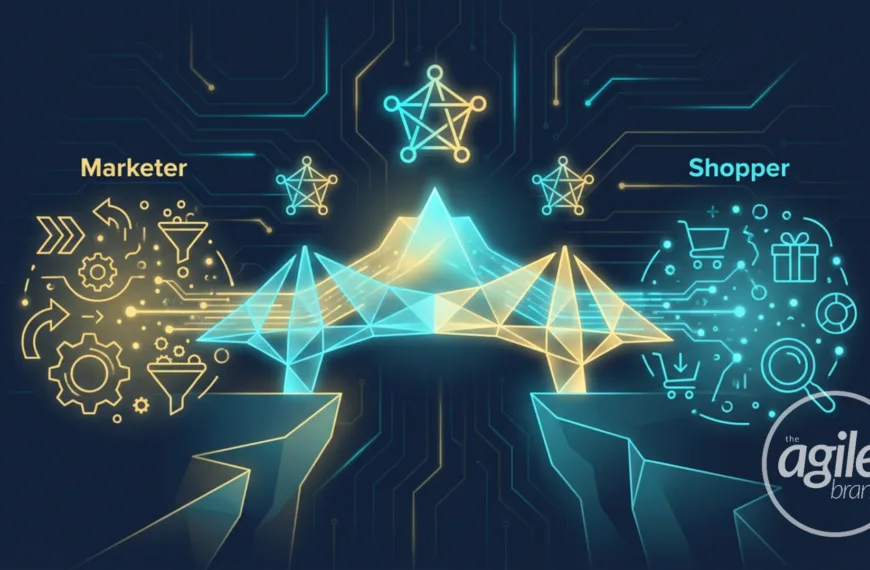
The challenge, as we all know, has never been a lack of belief in the power of the in-store experience, but a persistent inability to connect it meaningfully to our sophisticated digital marketing ecosystems. The store aisle has remained a frustrating black box, rich with intent but poor in attributable data. This is precisely where the next evolution of retail media is taking shape. We’re moving beyond simply placing digital ads on retailer websites and into a third wave, one where the physical experience itself becomes measurable, data-rich media. It’s about bridging the chasm between an anonymous shopper and a known customer, transforming a fleeting moment of discovery into a durable, first-party data asset. This isn’t a theoretical future; it’s a present-day reality that demands our attention, and a re-evaluation of how we structure our teams, budgets, and strategies.
The Third Wave: From Influencing Choice to Creating Demand
The term “retail media” has been stretched to its limits, often describing anything from a sponsored search result on a grocery app to a display ad on a third-party site. To make sense of where we’re headed, it helps to understand where we’ve been. The first wave was about monetizing the digital shelf—basic search and e-commerce placements. The second wave expanded outward, using retailer data to target audiences across the open web. According to Dilini Fernando, Freeosk’s CMO, we are now entering a far more interesting and integrated phase.
“Retail media 3.0, or this phase that we’re currently facing, is really about taking physical experiences, taking the physical world, and turning that into measurable media… it really is about not just influencing through existing buyers and what choice they’re gonna make, but really about creating total net new demand through experiences that, you know, are themselves media.” – Dilini Fernando
This is a critical distinction for marketing leaders. It reframes in-store activation from a siloed “shopper marketing” or “trade” expense into a core component of the brand’s media strategy. For years, in-store activities like demos and end-cap displays were measured on soft metrics or, at best, a hazy correlation to weekly sales. By transforming these moments into digitally connected events, we can now apply the same rigorous KPIs we use for our digital campaigns: new-to-brand acquisition, household penetration, lift, and even long-term customer value. This isn’t just about influencing a shopper who is already considering your category; it’s about generating entirely new demand by introducing a product to someone who had no prior intent. It’s the difference between intercepting a journey and starting a new one.
Solving the Measurement Problem That Held In-Store Back
If the potential has always been so great, why has in-store investment lagged so far behind digital? The answer isn’t a lack of strategic vision, but something more pragmatic: inertia. We gravitate toward what is easiest to activate and, more importantly, easiest to measure. The C-suite and finance departments speak the language of attributable ROI, and for too long, the physical store has been a fluency test that marketing departments couldn’t pass. Freeosk CEO and Co-founder Matt Eichorn acknowledges this head-on.
“I think the real reason is what perhaps has got people tripped up, and, and maybe rightly so, which is the lack of measurement of this. I think intuitively everybody know it works… we wanted to be able to provide brands really what they’re looking for and what they got used to, the rigor of digital.” – Matt Eichorn
This is the crux of the issue. Intuition doesn’t survive a budget meeting. The breakthrough of experiential retail media lies in its ability to finally connect an in-store action to a unique shopper identity. By creating a compelling value exchange—a free sample, an exclusive offer—and using a retailer’s loyalty program as the key, you can tie a physical interaction to a digital profile. That simple scan of a loyalty card or entry of a phone number transforms an anonymous moment into a trove of data. We can now see not only that a shopper engaged, but who they are, what else is in their basket, and whether they convert to a full-size purchase that week, a month later, or six months down the line. This is the closed-loop attribution that performance marketers have dreamed of for the physical world, and it’s the key that unlocks serious, sustained investment.
Creating Participatory Media and First-Party Data
Digitizing the in-store experience is about more than just measurement; it’s about elevating the experience itself. A passive, one-way communication—a shelf talker or a video loop—can easily become part of the background noise of a busy store. The most effective activations are interactive, multi-sensory, and participatory. They create a destination that shoppers willingly seek out, not an interruption they try to avoid. This shift in mindset from interruption to participation is essential for earning a customer’s attention and, crucially, their data.
“We don’t wanna be a one-way communication platform that maybe a shopper will see or hear. We wanna be that destination that a shopper willingly walks towards. And that, for me, is the most exciting part of where we are in this retail media journey… that is participatory retail. That is participatory media. And I believe that is gonna be an increasingly important format for all of retail.” – Dilini Fernando
When a shopper chooses to engage—to try a sample, rate a product on a tablet, or scan for a coupon—they are providing an incredibly powerful, zero-party data signal. In an age of signal loss and cookie deprecation, these real-world indicators of intent are gold. That interaction can become the foundation for a host of subsequent actions: adding the shopper to a retargeting audience, sending a follow-up email with a recipe, or tailoring future in-store offers. It feeds the first-party data engine with high-fidelity information that is permission-based and rooted in a tangible, positive brand experience. The data shows this works; Freeosk has seen interactive tablet experiences on demo carts increase the volume of product ratings by as much as 7X in a single afternoon, turning a simple tasting into a massive generator of social proof and actionable data.
The Future of Retail: Optimizing for Discovery
For decades, the dominant logic of physical retail has been efficiency. Get the shopper in, help them find what’s on their list, and get them out as quickly as possible. This is the “intent” model, and it’s been perfected. But as Matt Eichorn points out, some of the most powerful digital platforms of our time operate on a completely different principle: discovery.
“One thing that TikTok taught everybody, certainly the retail industry, is that discovery can be just as powerful as intent… what would it look like if they could optimize a little bit more for discovery?” – Matt Eichorn
This is the strategic challenge and opportunity for every brand and retail leader. What if the store wasn’t just a place for replenishment, but a theater for discovery? We have a captive audience, an environment that can engage all five senses, and now, the technology to connect it all. This isn’t about abandoning the efficiency model but augmenting it with moments of curiosity, delight, and serendipity. This is where incremental growth lives—in the products that weren’t on the list but end up in the cart because of a compelling experience. By creating these moments, brands don’t just build today’s basket; they build the brand affinity and trial that drives loyalty for tomorrow.
The narrative that physical retail is a relic is not just outdated; it’s wrong. The store is the next great frontier for data-driven, experiential marketing. The convergence of the physical and digital worlds is no longer a high-concept buzz-phrase but a practical, measurable reality. Platforms now exist to bridge the gap, close the attribution loop, and turn fleeting in-store moments into lasting customer relationships.
For us as leaders, the imperative is clear. We must begin to break down the organizational and budgetary silos that separate our digital, brand, and shopper marketing teams. The modern customer journey is fluid, and our strategies must be as well. The brands that will win the next decade are not the ones who choose between digital and physical, but the ones who master the art of weaving them together into a single, seamless, and spectacular customer experience. The tools are here. The opportunity is in the aisles.