Nearly every marketing leader has been told to “do more with AI” — and many of them are now sitting on a pile of pilots, a growing bill, and not much to show their CFO. So why is it that adoption of AI in marketing is so high, while the number of organizations actually getting predictable returns from it is so low?
Agility requires the discipline to reimagine how work gets done before automating it — because pointing AI at a broken process just produces a faster broken process.
Today, we’re going to talk about:
- Why so many enterprise AI initiatives stall between ambition and production, and what separates the organizations that succeed from the ones that quietly cancel their projects
- How marketing and CX teams can move from disconnected experiments to a governed, agent-powered operating model that turns a brief into live 1:1 engagement
- How to make the economics of AI predictable — so the people approving these investments can actually forecast both outcomes and cost
To help me discuss this topic, I’d like to welcome, Don Schuerman, CTO & Head of Marketing at Pega.
About Don Schuerman
As CTO and Vice President of Marketing & Technology Strategy at Pegasystems, I see my role as being a “Chief Translation Officer” – bridging the gap between cutting-edge technology and real-world business value. With 25 years of experience in orchestration and AI technology, I’m passionate about translating complex technical concepts into meaningful solutions that drive digital transformation for global organizations. My approach to technology leadership has been shaped by an unexpected source: 20 years of improv comedy at ImprovBoston’s Mainstage. The skills I honed there – active listening, storytelling, and thinking on my feet – now help me connect with both technical teams and business leaders. It’s where I also met my wife, proving that sometimes the best partnerships form when you say “yes, and…” At Pega, I lead the intersection of technology and go-to-market strategy across our enterprise AI decisioning and workflow automation platform. My focus is two-fold: translating the power of technology into tangible value for our Fortune 500 clients, while ensuring our technology roadmap reflects the evolving needs of these organizations.
Don Schuerman on LinkedIn: https://www.linkedin.com/in/donschuerman/
Resources
Pega provides the leading AI-powered platform for enterprise transformation. The world’s most influential organizations trust Pega’s technology to reimagine how work gets done by automating workflows, personalizing customer experiences, and modernizing legacy systems. Since 1983, Pega’s scalable, flexible architecture has fueled continuous innovation, helping clients accelerate their path to the autonomous enterprise. Learn more at Pega.com
We’re proud to be a media partner for #MAICON26 – Oct. 13-15! Learn how AI can power your marketing and business and help you grow smarter. Use code AGILE150 to save! https://aglbrnd.co/r/7fe458ced0f04658
Reach your customers with Reddit. Spend $500 in ad spend, get $500 back in ad credit! Learn more: https://advertalize.com/r/491818c79fb1873f
Don’t miss We Make Future – the International Festival of Innovation in AI, Tech, and Digital Marketing, June 24-26 in Bologna. Learn more: https://aglbrnd.co/r/c80991afff416bb2
The most influential minds in software, AI, and engineering leadership will be at WeAreDevelopers World Congress North America, September 23-25 in San Jose. Learn more: https://aglbrnd.co/r/60a7299222a7bcf1
Enjoyed the show? Tell us more at and give us a rating so others can find the show at: https://aglbrnd.co/r/faaed112fc9887f3
Don’t miss a thing: get the latest episodes, sign up for our newsletter and more: https://aglbrnd.co/r/35ded3ccfb6716ba
Check out The Agile Brand Guide website with articles, insights, and Martechipedia, the wiki for marketing technology: https://www.agilebrandguide.com
Transcript
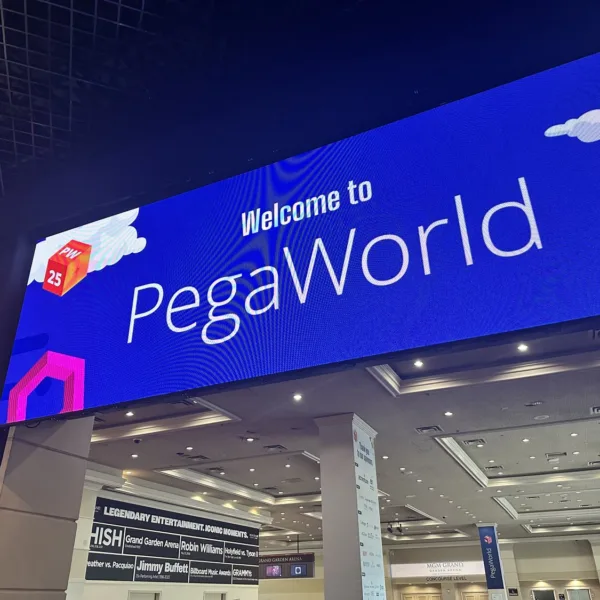
[00:00:49] Greg Kihlström: Hi. I’m Greg Kihlström, host of The Agile Brand. And here’s a question for you. Nearly every marketing leader has been told to do more with AI, and many of them are now sitting on a pile of pilots, a growing bill for token usage, and too often, not much to show their CFO. So why is it that adoption of AI is so high while the number of organizations actually getting predictable returns from it is so low? Today, we’re at PegaWorld 2026 at the MGM Grand in Las Vegas, and we’re going to discuss why so many enterprise AI initiatives stall between ambition and production, and what separates the organizations that succeed from the ones that quietly cancel their projects, how marketing and CX teams can move from disconnected experiments to a governed agent-powered operating model that turns a brief into a live one-to-one engagement, and how to make the economics of AI predictable so the people approving these investments can actually forecast both outcomes and cost. To help me discuss this topic, I’d like to welcome Don Schuerman, CTO and Head of Marketing at Pega. Don, welcome back to the show.
[00:02:54] Don Schuerman: It is great to be here, Greg.
[00:02:55] Greg Kihlström: Yeah, looking forward to talking about this. And yeah, it’s been great, uh, being at PegaWorld as well. Uh, before we dive in, though, why don’t you give a little background on yourself and your role at Pega?
[00:03:04] Don Schuerman: Yeah. So, so I, I, you know, I’m kind of in an interesting position, right? My, um, my career at Pega started in delivery and engineering. I was in support, delivery engineering, and then eventually ended up finding myself in the go-to-market side, doing a lot of pre-sales, what, you know, the, the cool kids today call a forward-deployed engineer.
[00:03:22] Greg Kihlström: Yeah. (laughs) Right.
[00:03:23] Don Schuerman: Right? And eventually, from that role, moved into kind of becoming the CTO for Pega in terms of our field-facing technology leader, and ultimately running product marketing. And that eventually, kind of unbeknownst to me, started picking up different pieces of marketing and to the point that, like, I found myself in this weird role of being both the CTO, but also the person running the marketing team, so.
[00:03:44] Greg Kihlström: Yeah. Yeah. Well, yeah, and that’s not a, that’s not a common, uh, set of, you know, role, roles.
[00:03:50] Don Schuerman: No.
[00:03:50] Greg Kihlström: So, yeah. Yeah. Nice, nice. Well, yeah, let’s, uh, let’s dive in here, and we’re gonna talk about a few things. But, um, one of the things that was talked about here at PegaWorld was some research that, that Pega did recently with Savanta that found-
[00:04:03] Don Schuerman: Yeah.
[00:04:03] Greg Kihlström: … 96% of organizations that succeeded with agentic AI had first rethought their existing processes. And the biggest barrier the unsuccessful ones cited was simply a lack of understanding of what the technology could do. So, for that leader that’s been handed, like many have, a mandate to do AI, right, but not really a roadmap, what does rethinking the process first actually look like?
[00:04:29] Don Schuerman: Well, you know, let me just share, and frankly, from my own sort of perspective.
[00:04:34] Greg Kihlström: Yeah.
[00:04:34] Don Schuerman: Right? I, I think, you know, as somebody who, in my day job, runs a marketing team, there is so much in marketing that has, uh, e- existed in kind of traditional approaches, manual production, request-dispatch kind of modes of operation. And a lot of those processes fall over and don’t work anymore. They don’t scale when you really wanna use AI agents.
[00:05:00] Greg Kihlström: Yeah.
[00:05:01] Don Schuerman: So, we’ve been spending a lot of time just with my team sort of redesigning how that works. How do we, how do we move from maybe kind of big departmental operations with teams owning channels and teams owning creative to smaller, agile teams that have all the right skills sort of embedded in them-
[00:05:19] Greg Kihlström: Yeah.
[00:05:19] Don Schuerman: … have the autonomy and the accountability to operate maybe on a campaign, but complete control of the execution, to then also be able to pull in AI agents, to do things like brand development, brand compatibility, content generation, agents that can plug in and pull in the right necessary data science and data elements, you know, that we use of our own customer decision hub to, to make that happen. So, that kind of completely shift of sort of, what does the process look like and how do we work, I, I think that more so than, you know, what, what does Opus 4.8 bring us over Opus 4.7?
[00:05:57] Greg Kihlström: Yeah.
[00:05:57] Don Schuerman: I, I think that’s the real unlock for AI value, not, you know, getting the latest version of the model.
[00:06:03] Greg Kihlström: Yeah. Well, and in a way that, you know, just like more organizations are and, and should be moving towards, you know, an omni-channel world. … nobody want, nobody should have to understand the organization’s org chart, right-
[00:06:16] Don Schuerman: Right.
[00:06:16] Greg Kihlström: … to interact with the org. Like, to what you’re saying, that, uh, it’s almost the inside of the org is starting to look like that, too, as far as, you know, you have teams doing multi-channel work instead of channel teams that don’t talk with each other.
[00:06:30] Don Schuerman: That, that don’t, that don’t talk with each other, and, and, you know, you lead to, like, as you, as you kind of perfectly described it, like, your org chart is showing, right? It’s showing up in your marketing and in your customer experience. And in some ways, agents and, um, AI allow us to approach marketing in the way that we’ve always talked about wanting to do it, putting the customer at the center-
[00:06:53] Don Schuerman: … not thinking in terms of channels, ri- right? But that was always really hard to do. When you have agents that can actually start taking on some of those skills, I actually can empower a marketer to think about an entire customer journey from end to end in a way that I perhaps couldn’t before.
[00:07:08] Greg Kihlström: Yeah, yeah. Well, and I mean that for the, for the marketer, I think that kind of elevates the level of thinking as well. I mean, even if you’re super strategic in email marketing, once the customer gets outside of the email marketing silo-
[00:07:24] Greg Kihlström: … you know, their, their strategy kind of ends, right? So doesn’t that kind of elevate what humans are able to do?
[00:07:29] Don Schuerman: It, it, it does. I, I, I’ll tell you a great story. One of the, the women who works on our team is a copywriter, right? And so you talk about a role that feels threatened by AI.
[00:07:39] Don Schuerman: Right? And even when, two years ago when GPT first showed up, she talked about how she was resistant, she was kind of pushing against it. But the realization that she had was this doesn’t take her job, it changes it.
[00:07:54] Greg Kihlström: Yeah.
[00:07:55] Don Schuerman: And her job as a copywriter had historically been generate, write good copy. Well, I can actually do much more of that, ’cause I can use this tool to bake ideas off of. But what she actually now has the ability to do is scale good copy across the entire organization.
[00:08:12] Don Schuerman: Build the underlining skills and prompts and markdown files that actually let us make everybody in the company capable of writing brand-compliant, high-quality copy, right? Th- now, now her impact has gone from, you know, the couple of documents and website pages she sees every month to almost every piece of copy that the company might generate.
[00:08:38] Don Schuerman: Right? And that’s like, that’s empowering if you treat it that way.
[00:08:42] Greg Kihlström: Yeah, yeah. Of course, um, you know, with increased, uh, you know, automation and, and agentic, there’s also, you know, there, there is potential risk when, you know, if, if an agent is just to go too far down a path or something like that, and yet, you know, you had Wells Fargo on the stage today.
[00:09:00] Greg Kihlström: Pega certainly works with a lot of, a lot of customers in highly regulated, um, you know, industries and stuff like that. So, what’s the best approach? You know, there’s a lot of pressure to do more and automate more and go further kind of end to end. What’s the, you know, how do you do that while still, you know, maintain it or minimizing risk?
[00:09:21] Don Schuerman: So, the metaphor we use today that I really like is the idea of the sculptor and the watchmaker.
[00:09:27] Don Schuerman: Right? So if you think about it, watchmaker, precision, right?Um, consistent execution, ticking off the seconds, gears perfectly aligned. Sculptor, creative, free-flowing, discovering the forms, et cetera. And I think good marketing needs both.
[00:09:44] Don Schuerman: Right? And there’s great ways in which generative AI can help a sculptor generate new ideas, conceive of a brief. Um, but there’s also stuff that you need that watchmaker in.
[00:09:55] Don Schuerman: Like, you know, even if, even if I have agents helping me with my marketing process, it’s still a process.
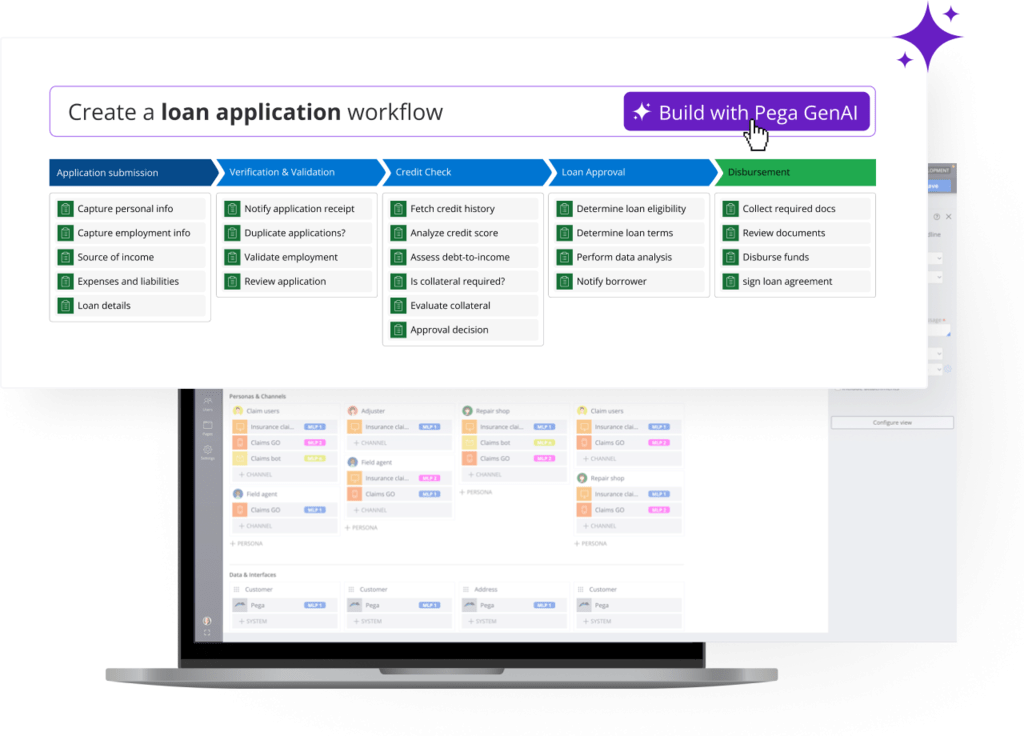
[00:10:03] Don Schuerman: There are still steps that I need to complete and gates that I need to go through. So we’re using Pega’s workflow capabilities to make sure that even if we have agents plugged in to do things like intake my marketing brief and recommend creative treatments and help us generate copy and pull in the right data sets, that’s all being orchestrated against a process where we’ve defined very clearly, “These are the steps we have to go through.”
[00:10:28] Greg Kihlström: Yeah.
[00:10:28] Don Schuerman: Um, you know, what’s powerful about what Wells Fargo is doing is they’re using agentic AI at design time to figure out what potential offers and actions are. But at runtime, the AI that they’re using is far more watchmaker-like. It’s, um, you know, it’s what we used to call AI three years ago-
[00:10:46] Don Schuerman: … machine learning, statistical models, et cetera. And those have a benefit of being, one, really, really fast, you know, so they can run decisions in 200 milliseconds-
[00:10:56] Don Schuerman: … which is, you know, and they do that, you know, six billion times a-like, like massive scale. It is always explainable. Like, those models, because they’re based on structured data, they can tell you why they made a decision. We can say, “This is why we offered this person this loan or didn’t offer them this credit card.” And those models have the ability to be continuously evolved in self-learning at a pace that AI, you know, they, to retrain an LLM is really expensive, even to fine-tune it. So, so we’ve got the watchmaker models when they make sense, the agentic models and the large language models at design time when they make more sense, and it’s the two of them coming together that I think is where the power lies.
[00:11:43] Greg Kihlström: Yeah, I, and I think that’s, that’s really powerful, because to your point, there, there’s not just one kind of AI, and there’s not, you know, generative AI, amazing in many ways, but very inefficient in so many other ways. And I, I think that’s, that gets to the, the cost component. I know there’s been a lot of talk about, you know, token maxing and e- and all that stuff, and just, you know, I know there was a big announcement about how Pega is structuring things, which I think-speaks a lot to how much faith you have in your-in, in how this works. So, can you talk a little bit about that?
[00:12:17] Don Schuerman: Yeah. What, what, what you’re referring to is we, we, we announced this week that we are not, for clients who want to use Pega to manage their workflows and decisioning and then even plug agents into that, we’re not gonna run a token meter on you. We’re gonna, we’re gonna charge you based on the work you get done. How many, you know, customer service requests do you, uh, process? How many i- exceptions do you resolve? How many loans do you, um, you fund? So that work-based approach, we are confident that the way we’ve built the architecture, we can give the agents very narrow context and instructions at runtime, so they don’t burn up these giant, giant token costs, right? Which, which is something that I think everybody is starting to realizing. And I think it’s part of… And frankly, I think it’s just part of the maturity of any
[00:13:02] Don Schuerman: technology as it goes through its sort of hype cycle and learning curve, right? A new technology shows up, we get shiny object syndrome.
[00:13:12] Don Schuerman: Right? We, we go, you know, we, we, we get in the mode of, like, where… Well, if, when you, when you’ve got a hammer, everything looks like a nail.
[00:13:18] Don Schuerman: And we start beating agents and LLMs against everything. And what we’re realizing is, oh yeah, sometimes I want a screwdriver. Sometimes I need a power saw.
[00:13:27] Don Schuerman: Like, it’s… And by the way, it’s not that Agentic and LLMs aren’t massively transformational and massively valuable tools in the tool chest. Like, like, we are going to find ourselves, and we maybe are at a place… I mean, I find in my life, I probably couldn’t work without it, right? Like, if, like, like, it is…
[00:13:45] Don Schuerman: Like, it’s massively, massively valuable, right? But it doesn’t obliviate the need for me to still have Microsoft Word on my laptop.
[00:13:53] Don Schuerman: It doesn’t oblivate the need for me to still, you know, wanna be able to… Sometimes I just wanna make a spreadsheet. Now, I can use AI to help me make that spreadsheet.
[00:14:01] Don Schuerman: I can use AI to help me evolve that spreadsheet, design time. Right? But at runtime, I just wanna run formulas in a spreadsheet. Maybe the, the hype, the hype cycle thing, back to the research even, you know, the, the research
[00:16:01] Greg Kihlström: found that, you know, the successful implementers had, surprise, surprise, pre-agreed success metric. You know, again, not a shocking thing, you know, when you run an experiment, you need a hypothesis and all that stuff, and yet we get so caught up in the hype and, “Isn’t this cool?” And stuff.
[00:16:18] Don Schuerman: Well, and I, and I think, you know, one of our, our presenters from, from MetLife this week threw up a cartoon that I think many of us have seen before, right? Of just sort of the boards and CEOs saying, “What do we want? AI. When do we want it? Now. What do we want it to do? We don’t know.”
[00:16:31] Don Schuerman: Right? And, and so there is, and I think we did have these, these moments in the industry, and, and it happens, right? ‘Cause this stuff is, is exciting and it is transformational, and it’s very easy to feel FOMO and concern. And like, like, I, you know… I find people are almost kind of more stressed than ever, ’cause if you, like, spend too much time on LinkedIn, you, you would think that like everybody in the world has started up a two-billion-dollar business with themselves, like, a intern paid in coffee and 30 agents, right? Like-
[00:17:06] Don Schuerman: …where in reality, that’s not what’s happening, right?
[00:17:09] Greg Kihlström: Yeah.
[00:17:09] Don Schuerman: LinkedIn is not the real world. The real world is complicated enterprises with messy processes-
[00:17:15] Don Schuerman: …and legacy systems, and really passionate, skilled people that now need to learn and evolve their ways of working to take advantage of that. And as cool and exciting as the models are, what the data and the survey points out is, the people who are succes- successful are the ones who lean in and do the kind of grindy work of change management, of helping everybody understand what the benefit and value is, of getting people agreed on what the outcomes need to be, and really thinking about, “How do I need to change my processes and my culture to make this stuff work?” Like, and to some extent, you know, it’s a little bit of like, “Yeah, this is Change Management 101,” and AI doesn’t make that go away.
[00:17:58] Don Schuerman: In fact, AI needs it more than ever.
[00:18:00] Greg Kihlström: Yeah, I mean… And, and in a sense, you know, some of, some of the tools available now to, you know, help with mainframe and legacy tech, um, migrations and stuff, it, it accelerates that part of it. But to your point, it doesn’t… The processes, the people, all of that stuff still has to change, so, so yeah.
[00:18:17] Don Schuerman: Well, and, and that’s what, that’s one of the things that we’ve been doing, you know, a lot with Blueprint. We’ve, we, we, we’re very deeply partnered with AWS, and we had AWS and, um, and also our joint client, uh, Unum Insurance, on stage. And what they were talking about was just that, right? That it’s one thing to lift and shift a bunch of COBOL code to the cloud- But the value comes when you can find the processes that are buried in your Cobalt code, reimagine them for the AI world. That’s what, you know, Amazon can help find the process with their, their tool called AWS Transform. Our capability in Blueprint actually helps you now reimagine those processes for the AI world, and then what we’ve been showing
[00:19:03] Don Schuerman: this week in, um, Infinity Studio now helps you then once you’ve reimagined those processes, rapidly deploy them so you start getting real value from them.
[00:19:11] Greg Kihlström: Yeah. Well, and I, I think that that reimagine part is, I’m sure everyone has a thought about that at some point, but I think they get caught up in the, you know, I, I call it like AI offense versus defense, right?
[00:19:24] Greg Kihlström: So it’s like the defense is let’s just put the Cobalt stuff in the cloud and, and everything-you know, status quo. But to actually reimagine, I mean, that, that takes human thought and, and creativity and, and strategy, right?
[00:19:37] Don Schuerman: Right. Yes, exactly. That’s exactly right. And, and that which is why I think that even as AI continues to evolve and get smarter, the human role to bring that judgment, to bring that strategy, to bring that creativity, it becomes even more important than it was before.
[00:19:56] Greg Kihlström: Yeah. Yeah, definitely. So, you know, one other thing here, um, that I, I think is important to talk, you know, there’s, there’s a lot of … Any, any organization has a lot of platforms and, and, and systems working, you know, whether in silos or ideally more, more closely together. One of the other interesting things that I heard at, at PegaWorld here is just, you know, the, the promise of MCP, you know-
[00:20:20] Greg Kihlström: …marketing teams, for instance, they’re already using Adobe or this other system, so on and so forth. Um, the ability for, you know, ’cause everybody wants to be the hub and, and there’s, you know, a million spokes or vice versa.
[00:20:35] Greg Kihlström: So, you know, how does, how does MCP kind of unlock that ability to have actual orchestration?
[00:20:42] Don Schuerman: Yeah. And, and I, I think one of the things that I think is interesting is sometimes as technology evolves, words lose meaning.
[00:20:50] Greg Kihlström: Yeah.
[00:20:51] Don Schuerman: And one of the words that I worry is losing meaning in this AI world is orchestration, right? Because everybody’s now orchestrating agents and orchestrating this, and, and it like, it’s great. As somebody who’s been in the orchestration business for 20 years-
[00:21:03] Greg Kihlström: Right, right. It’s rich. Right?
[00:21:05] Don Schuerman: Like the, the, the, I’m glad, and I’m like, everybody is welcome to the party. It’s great. I also think if you look though at most organizations, there’s not gonna be a single orchestration hub. Like, like this world doesn’t work in hubs anymore. This world is increasingly becoming federated. So what MCP offers is the ability for us to create almost catalogs of services, domain expertise, right? So if I’ve got, if I’ve got an agent that really understands my brand and I’ve really successfully … You know, I think one of the things that marketers need to start doing is they need to start thinking about brand as code. Like, like it’s literally, it’s code. It’s managed in Markdown, it’s stored in a GitHub.
[00:21:46] Don Schuerman: Like it’s code. So maybe you’ve got an agent that really has got your brand code, it knows it, it understands it. Now I wanna use MCP to make that agent available wherever, and that agent may plug into my marketing processes. That agent may plug into my sales processes, so like my salespeople, when they do an outreach, they plug into the brand code agent to get that. That agent may plug into my HR processes so that when we send in, you know, a, a, a welcome to the company letter to a new hire, it also gets written in the brand.
[00:22:15] Greg Kihlström: Yeah.
[00:22:16] Don Schuerman: Right? So, so I think it becomes less about there being a single orchestration hub. You may have your HR process defined over here, you may have your sales process defined over here, you may have your marketing process defined over here. But if I’ve got MCP on my agents, I can reuse the knowledge that lives in an agent in a bunch of different places.
[00:22:36] Greg Kihlström: Yeah. Yeah. Love it. Well, Don, thanks again for joining. Always great to talk with you. Got a couple, couple last things here as, as we wrap up. Um, so we’re here at PegaWorld, um, day two, you know, towards the end, but not, not quite over yet. Um, what’s been a highlight so far?
[00:22:52] Don Schuerman: To me, the highlight is always the conversations that I have sitting with clients after, after the keynote presentations when they ask me sort of, “Hey, how can I, how can I use this?” And we, we actually get to brainstorm and think about some areas where we can carry things forward, you know? So I was talking with a couple of different clients today about how, how they’re gonna take things like Blueprint back to their teams and literally start using it next week to reimagine some of the processes they have in their business. That, to me, is what makes all this worthwhile.
[00:23:26] Greg Kihlström: Yeah. Yeah. Love it. And last question for you. What do you do to stay agile in your role, and how do you find a way to do it consistently?
[00:23:34] Don Schuerman: Well, like, one is you gotta be constantly playing, right? So just, you, you know, AI is a hands-on tech, and it’s not the job of a CTO. It’s everybody’s job to do it. So you’ve gotta stay constantly playing. You’ve gotta realize the, the other thing I think is important for us to, to everybody to get in their brains, I think we sometimes worry with tech that we don’t know. We’re not the experts. We should … Like, nobody’s an expert in this right now.
It’s all new. The rules are changing. The, you know, as CTOs would say, the architectural patterns have not been written yet. They’re kind of jello and squishy right now. So you just need to get your hands on and do it. The other thing I also think is really important is also give yourself moments to stand up and take a break. Like, it can become, it can become really tempting and really exciting to like just be in Claude all the time, constantly asking it things, constantly playing with it. Go for a walk, go for a jog, you know, sit down, turn your phone off, have a conversation with a colleague or a friend. Watch a piece of art or a movie that really, you know, interests you because that, especially as marketers, that human connection, that creativity, that taste- is a spark that we need to continue to bring, and AI isn’t gonna bring that. And so we have to keep that alive, and that means turning the AI off every once in a while.
[00:24:56] Greg Kihlström: Yeah. Love it, love it. Well, again, I’d like to thank Don Schuerman, CTO and head of marketing at Pega for joining the show. You can learn more about Don and Pega by following the links in the show notes. (instrumental music) Pega provides the leading AI-powered platform for enterprise transformation. The world’s most influential organizations trust Pega’s technology to reimagine how work gets done by automating workflows, personalizing customer experiences, and modernizing legacy systems. Since 1983, Pega’s scalable, flexible architecture has fueled continuous innovation, helping clients accelerate their path to the autonomous enterprise. Learn more at Pega.com. And thanks again for listening to the Agile Brand
[00:25:41] Greg Kihlström: podcast. If you liked the episode, hit subscribe and drop a rating so others can find the show too. And if you’re interested in consulting, advisory work, or if you need a speaker for your next event, feel free to reach out. Just visit gregkihlstrom.com. That’s G-R-E-G-K-I-H-L-S-T-R-O-M.com. The Agile Brand is produced by Missing Link, a Latina-owned, strategy-driven, creatively-fueled production co-op. From ideation to creation, they craft human connections through intelligent, engaging, and informative content. Until next time, stay curious and stay agile.