What if the biggest barrier to your company’s transformation isn’t your legacy technology, but your legacy thinking about it?
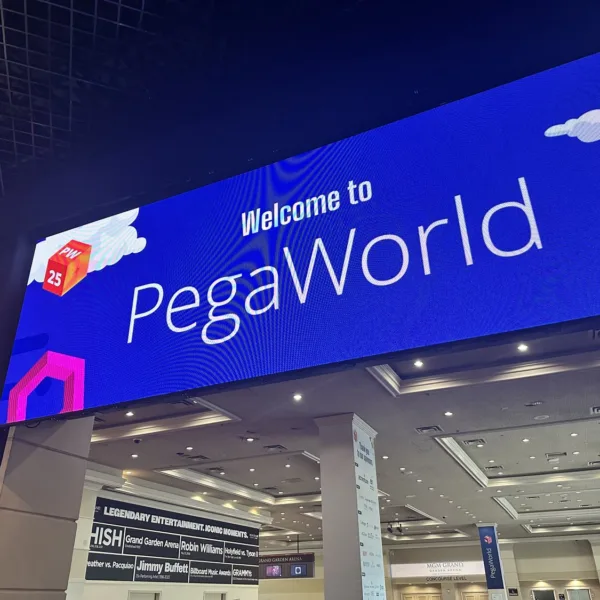
Today, we are at PegaWorld 2026 at the MGM Grand in Las Vegas, and, we’re going to talk about the immense challenge and opportunity of enterprise modernization. Specifically, we’ll cover:
- Translating a massive technology initiative into tangible improvements in the customer and partner experience.
The practical steps required to make an enterprise ‘AI-ready’ by bridging the gap between legacy systems and modern cloud platforms.
How transforming core operations can directly enable marketing and product teams to accelerate speed-to-market.
To help me discuss this topic, I’d like to welcome Shelia Anderson, EVP Chief Information & Digital Officer at Unum.
About Shelia Anderson
Shelia Anderson is Executive Vice President and Chief Information and Digital Officer at Unum, where she leads the company’s technology and digital strategy. A four-time CIO with more than 25 years of technology leadership experience, Shelia has built a reputation for driving large-scale business transformation through cloud migration, AI adoption, digital modernization, and agile operating models. Prior to joining Unum in 2025, she served as Chief Information Officer at Aflac, where she led enterprise technology strategy, customer experience transformation, and AI-driven innovation initiatives. Throughout her career, Shelia has been recognized as one of the industry’s leading technology executives, including recognition among the Top 100 Women in FinTech.
Unum is a leading provider of workplace benefits and insurance products, serving millions of customers through disability, life, accident, critical illness, and supplemental health insurance offerings. The company works with employers across the United States and United Kingdom to provide financial protection and income replacement benefits that help individuals and families navigate life’s unexpected challenges. In recent years, Unum has invested heavily in digital transformation, cloud modernization, automation, and AI initiatives designed to improve customer experiences, streamline operations, and accelerate innovation across the business.
Shelia Anderson on LinkedIn: https://www.linkedin.com/in/sheliaanderson/
Resources
Unum: https://www.unum.com/
Pega: https://www.pega.com
Pega provides the leading AI-powered platform for enterprise transformation. The world’s most influential organizations trust Pega’s technology to reimagine how work gets done by automating workflows, personalizing customer experiences, and modernizing legacy systems. Since 1983, Pega’s scalable, flexible architecture has fueled continuous innovation, helping clients accelerate their path to the autonomous enterprise. Learn more at Pega.com
We’re proud to be a media partner for #MAICON26 – Oct. 13-15! Learn how AI can power your marketing and business and help you grow smarter. Use code AGILE150 to save! https://aglbrnd.co/r/7fe458ced0f04658
Reach your customers with Reddit. Spend $500 in ad spend, get $500 back in ad credit! Learn more: https://advertalize.com/r/491818c79fb1873f
Don’t miss We Make Future – the International Festival of Innovation in AI, Tech, and Digital Marketing, June 24-26 in Bologna. Learn more: https://aglbrnd.co/r/c80991afff416bb2
The most influential minds in software, AI, and engineering leadership will be at WeAreDevelopers World Congress North America, September 23-25 in San Jose. Learn more: https://aglbrnd.co/r/60a7299222a7bcf1
Enjoyed the show? Tell us more at and give us a rating so others can find the show at: https://aglbrnd.co/r/faaed112fc9887f3
Connect with Greg on LinkedIn: https://www.linkedin.com/in/gregkihlstrom
Don’t miss a thing: get the latest episodes, sign up for our newsletter: https://aglbrnd.co/r/35ded3ccfb6716ba
Check out The Agile Brand Guide website with articles, insights, and Martechipedia, the wiki for marketing technology: https://www.agilebrandguide.com
Transcript
[00:01:11] Greg Kihlström: Hi, I’m Greg Kihlström, host of The Agile Brand, and here’s a question for you: What if the biggest barrier to your company’s transformation isn’t your legacy technology, but your legacy thinking about it? Today, we’re at Pega World 2026 at the MGM Grand in Las Vegas, and we’re gonna talk about the immense challenge and opportunity of enterprise modernization. Specifically, we’re gonna cover translating a massive technology initiative into tangible improvements in the customer and partner experience, the practical steps required to make an enterprise AI-ready by bridging the gap between legacy systems and modern cloud platforms, and how transforming core operations can directly enable marketing and product teams to accelerate speed to market.
[00:01:57] Greg Kihlström: Welcome to Season 8 of The Agile Brand podcast. This season, we’re going all in on expert mode MarTech, AI, and customer experience, talking with the people and platforms behind the brands you know and love. Again, I’m your host, Greg Kihlström, and I help Fortune 1000 companies make sense of MarTech, AI, and marketing ops. Hit subscribe or follow to make sure you always get the latest episodes, and leave us a rating so others can find us as well. Pega provides the leading AI-powered platform for enterprise transformation. The world’s most influential organizations trust Pega’s technology to reimagine how work gets done by automating workflows, personalizing customer experiences, and modernizing legacy systems. Since 1983, Pega’s scalable, flexible architecture
[00:02:42] Greg Kihlström: has fueled continuous innovation, helping clients accelerate their path to the autonomous enterprise. Learn more at pega.com. To help me discuss this topic, I’d like to welcome Shelia Anderson, EVP, chief information and digital officer at Unum. Shelia, welcome back to the show.
[00:03:01] Shelia Anderson: Thank you. I’m glad to be here.
[00:03:02] Greg Kihlström: Yeah, good to- good to talk with you. Great keynote this morning, and-
[00:03:05] Shelia Anderson: Thank you.
[00:03:06] Greg Kihlström: … great to have you back on the, on the show, so-it’s been a- been a couple of years, but gr- great to see you. before we dive in, why don’t you give a little background on yourself and your role at Unum?
[00:03:16] Shelia Anderson: Of course. So, I am actually in a new role at Unum. I have been there for 12 months. I’m the chief information and digital officer, which basically means I have responsible for all technology for Unum Group.
[00:03:27] Greg Kihlström: Great, great. So, we’re gonna… and actually, maybe just a little background on Unum as well, for those that are less familiar.
[00:03:34] Shelia Anderson: Sure.
[00:03:34] Greg Kihlström: You know, what- what’s the company do, who are its- its customers, and- and- and things like that?
[00:03:39] Shelia Anderson: Absolutely. So Un- Unum Group is a- a 175-year-old company focusing on the employer benefits space, so think of services like leave and absence management, long-term disability, all of those group types products that you would purchase through your employer or at a work site.
[00:03:59] Greg Kihlström: Nice, nice. Okay, great. So let’s- let’s dive in then, and, you know, caught your keynote this morning. It was definitely a- an amazing story. I know that a lot of companies are facing similar enough, challenges here, and, you know, your keynote was titled “COBOL Meets Cloud.” so maybe walk us through, for those that weren’t able to catch it, you know, what- what was the business problem, customer experience problem, that Unum identified that made this modernization, not only necessary, but, you know… well, necessary, I guess?
[00:04:35] Shelia Anderson: Ab- absolutely. Thank you for that question. First of all, part o- part of what we were looking to solve is- is really addressing two things. One was a need for our business to be able to take advantage of some of the new and emerging capabilities, specifically in our claims process, how we service those customers through, the claims experience. The other part that’s more internally fa- fo- focused for us was to be able to prove out methods that we could actually use as more of a mainframe modernization strategy that would be broader than the one focused area for claims. So, those are the two objectives that we had when really looking at, how do we go about solving for this, was really, one, to focus on that customer experience lens, and then the second
[00:05:20] Shelia Anderson: one, which is also a key more internal focus goal for us, which was to look at what might we be able to prove out as we look at our mainframe modernization strategy for the future, and how might we choose to exit the mainframes, which for us, it’s leapfrogging.
[00:05:34] Greg Kihlström: Yeah, yeah. I mean, ’cause, yeah, the mainframes, they don’t just handle one part of the- of the process. It’s-I think the… so some of this, obviously there’s a lot of technology involved, there’s a lot of data involved, but there’s also, a mindset shift as- as well in-
[00:05:53] Shelia Anderson: Yes.
[00:05:53] Greg Kihlström: … you know, just kind of how people think about legacy systems, and… … how they think about their solutions. Can you maybe talk a little bit about that part of, you know, what, what kind of mindset shift is required to really do this right?
[00:06:06] Shelia Anderson: Absolutely. And I’ll tie that into our broader strategy as a company. So, in the year that I’ve been there, we’ve absolutely started focusing on much more of what I’ll call business aligned value creation through all of our investments in technology. So, that really doesn’t start with technology. It starts with our business, focusing on making sure that we’re solving for the biggest opportunity business challenges. And so, that, that means really looking at how we prioritize the work that we’re doing, saying no to the things that aren’t gonna yield the greatest value in our business, so that’s a bit of a new muscle for the company too. That’s not even related to the technology. It’s related to, how do we choose what we’re going to invest in from the beginning?
[00:06:45] Greg Kihlström: Yeah, yeah. Well, and I, to, to that point to, you know, modernization products, projects often get bogged down in trying to boil the ocean, right? So it’s, why, you know, why start with one thing? Why not, you know-
[00:07:01] Shelia Anderson: Absolutely.
[00:07:01] Greg Kihlström: … everything needs to be modernized, right? So, you know, you, you mentioned, you know, starting with, with a few things, how did you prioritize which barriers, you know, like the claims processing and things like that-
[00:07:13] Shelia Anderson: Mm-hmm.
[00:07:13] Greg Kihlström: … to tackle first and, you know, possibly to show early value as well?
[00:07:18] Shelia Anderson: Sure. And it, and it’s just that we prioritize it based upon the business aligned value.
[00:07:23] Greg Kihlström: Mm-hmm.
[00:07:23] Shelia Anderson: In the future, we’re actually aligning as a business to, to value streams. So, we do have a front to back ownership from our business of each of those key value streams across the company and the associated technology investments that go into that. So, that’s really how we’re choosing where we place our bets, where we place our investments, and one of the biggest shifts is actually measuring the business outcomes, so that we have the offsetting benefit that’s expected relative to the investments that we’re making in technology, people, and process.
[00:07:54] Greg Kihlström: Yeah. Well, and I would imagine that starting that outcome measurement with a smaller scope-
[00:08:01] Shelia Anderson: Mm-hmm.
[00:08:01] Greg Kihlström: … I mean, that-you can course correct, right, you know, as well?
[00:08:05] Shelia Anderson: Exactly. And, and there’s just not the, the tolerance anymore for multiyear, three to five-year-
[00:08:11] Greg Kihlström: Yeah.
[00:08:11] Shelia Anderson: … longer term investment journeys that have longer term, longer tails on actually receiving the return on that investment as well. So, I think that’s one of the biggest shifts that you’re starting to see with AI, the opportunity to sh- I call it peeling the onion approach. So, you’re actually able to start figuring out, how can you decouple and minimize the dependency on the mainframes, while still leveraging the data layer? if you think about API strategies of the future, I think that’s going to be much more, prevalent as you start to see companies peeling away and owning the customer experience layer maybe in a different way, and moving more to, a data layer that provides you access to all of the data that’s embedded in the legacy systems.
[00:08:56] Greg Kihlström: Well, and I think that, that touches on one of the things you mentioned in your, in your keynote was just, you know, the business has to keep moving, right?
[00:09:04] Shelia Anderson: Mm-hmm.
[00:09:04] Greg Kihlström: I mean, customers keep having claims-
[00:09:06] Shelia Anderson: It doesn’t stop.
[00:09:06] Greg Kihlström: Right?
[00:09:06] Shelia Anderson: It doesn’t stop, and I think that’s one of the finest… The, the biggest challenges to me is, the business is, is still moving along while you’re doing all this work. And so, I always equate it to you’re, you’re flying the plane to a destination, but you’re changing out the interior of the plane, knowing you have to land it.
[00:09:23] Shelia Anderson: And it’s very much the same in a business as we’re looking to change our, internal, whether it’d be people, process, technology, but you still have to deliver today. So you have to honor the commitments today while you’re actually redefining tomorrow.
[00:09:36] Greg Kihlström: Yeah, yeah. And, and so, you know, certainly AI is a big part of that.
[00:09:40] Shelia Anderson: Huge.
[00:09:41] Greg Kihlström: and even the people in process part is, is related to how they use AI or, or, or not-
[00:09:49] Shelia Anderson: Right.
[00:09:49] Greg Kihlström: … in some cases, but, so this, this phrase, “AI ready,” you know, is, is used, used quite a bit, but-you know, can often feel abstract.
[00:09:58] Shelia Anderson: Mm-hmm.
[00:09:58] Greg Kihlström: You know, what, what does that mean for a company like Unum- to be AI ready?
[00:10:01] Shelia Anderson: Thank you for asking the question. I love this, because it’s absolutely not abstract. I would say it’s, you have to take a very intentional approach to being AI ready. And so, for us, we’ve separated it into two primary categories, and I’ll talk about both of those. One is what I call everyday AI for the broad employee population, and for example, how we actually implement that, we actually have training curriculums that we are rolling out to the entire company. We’ve rolled out things, capabilities like Copilot, so we’re actually encouraging citizen development throughout the enterprise. We’re putting the right controls in place to manage that, and we’ll continue to monitor that as it evolves. So, that’s, that’s definitely when you put that in the category of, how do you start moving your whole company forward, you do have to be very intentional
[00:10:47] Shelia Anderson: to educate, to take the fear out, so the, the broader employee base can start interacting with and understand the value that they can get. And at the end of the day, they’re going to be better, a- and their jobs will be better-
[00:11:00] Greg Kihlström: Right.
[00:11:00] Shelia Anderson: … if they’re able to see the value coming through in the work that they’re doing every day and bringing forward those recommendations. On the other side of that is what I like to c- call more of the customer embedded AI. Much of that does require more of a deep engineering skillset, and for example, inside of engineering, this year when I came in, we actually established a goal, so that 100% of my engineering staff would be fully trained in leveraging AI in their daily work. And so, we’re seeing the productivity and the outcomes coming out of that. That’s definitely something that you have to do very intentionally.
[00:11:35] Greg Kihlström: Yeah.
[00:11:35] Shelia Anderson: We’ve made available those training programs, and it’s something that we’re embedding in how we’re working. So, I think the shift for me is A- AI ready means really enabling both your broad employ- employee population, as well as your subject matter experts, whether you be an engineer, o- our customer experience, our product owners, even our folks in our operational side of the business, for example, f- My peer, Andrew, runs our c- our customer operations function. He and I are tightly, integrated in how we look at ou- our combined strategies together, so that as we look at investment and technology, we have the offsetting value that actually is being measured, and the outcomes are being measured in the operations as well.
[00:12:17] Greg Kihlström: (instrumental music) You know that moment when marketing wants a landing page, design mocks it up, and engineering says, “Yeah, we’ll get to it”? Thousands of businesses, from early stage startups to Fortune 500s are choosing to build their websites in Framer, where changes take minutes instead of days. Framer’s a website builder that works like your team’s favorite design tool. With real-time collaboration, a robust CMS with everything you need for great SEO, and advanced analytics that include integrated A/B testing, your designers and marketers are empowered to build and maximize your .com from day one. Changes to your Framer site go live to the web in seconds with one click without help from engineering. Framer’s also an enterprise solution, giving brands like Perplexity, Miro, and Mixpanel
[00:13:02] Greg Kihlström: the confidence they need to build their websites in Framer. Learn how you can get more out of your .com from a Framer specialist, or get started building for free today at framer.com/agile for 30% off a Framer pro annual plan. That’s framer.com/agile for 30% off. Framer.com/agile. Rules and restrictions may apply.
[00:13:23] Shelia Anderson: Still waiting in line? Again? That’s time you’ll never get back. Save time and money with stamps.com. Over four million businesses have skipped the line with stamps.com. Join them to save up to 90% off carrier rates from your computer or phone right now. Print postage for certified mail, registered mail, and packages in seconds, then schedule a pickup right from your home or office. For a limited time, go to stamps.com and use code PODCAST for a free welcome gift. Taxes and fees apply.
[00:13:55] Greg Kihlström: (instrumental music) So let, let’s talk a little bit more about the, the measurement, then. certainly, that sounds like a key approach, and something that you approached from the start, which is-
[00:14:06] Shelia Anderson: Yes.
[00:14:06] Greg Kihlström: … you know, I th- I think the right, the right way to do it.what is that … you know, what is that … you know, there’s always gonna be the traditional metrics of the business, and, and, and those likely wouldn’t change, but what are the KPIs of, you know, the, that go into measuring success?
[00:14:22] Shelia Anderson: Sure, and it, it, I will say it’s going to depend.
[00:14:25] Greg Kihlström: Y- of course, yeah.
[00:14:25] Shelia Anderson: So, it, it, generally, for example, in, in the work that we’ve done with Pega, because that is focused on the claims side, we look at the claims process. So, what you would do is look at the actual process, end-to-end view of the process that you’re automating or solving differently, and then look at what is the business outcome that you want to measure against that process. So, in the claims journey for us, it’s customer satisfaction, average handle time, for example. A lot of that also ties in with a lot of the other metrics that we have in our contact center. So, you would look at the specific business process, and that will vary, honestly.
[00:14:59] Greg Kihlström: Yeah.
[00:14:59] Shelia Anderson: gone are the days of simply reporting the internal IT metrics. We still do those so that we can see improved productivity on an agile squad, for example, but the ultimate outcome is the outcome that you’re driving for the business.
[00:15:11] Greg Kihlström: Yeah, yeah. And then, you know, I know, I know you talked about the, the training aspect, and, you know, o- obviously that’s a key part in, getting teams involved. How, how do you think about measuring that? Is it, is it adoption? Is it, you know, how, h- how do you measure your success there?
[00:15:28] Shelia Anderson: Well, I think the truest measure of success is when you see people actually, able to put to value what they’re learning-
[00:15:36] Greg Kihlström: Mm-hmm.
[00:15:36] Shelia Anderson: … in their work every day.
[00:15:37] Greg Kihlström: Yeah.
[00:15:37] Shelia Anderson: so do we have specific concrete measures where we’re able to measure that today? N- not today. I think that’s something that will absolutely evolve to. Part of w- where we’re wanting to go is to really get to a more empowered approach, and really centered around learning, where people see the value of learning new skills and they’re able to put that to work and see the value come back into the business as well.
[00:15:57] Greg Kihlström: Yeah, yeah. I mean, that, that’s something I’ve definitely heard from many others, and once they kind of hit, get past some, you know, initial, you know, initial hurdle, a lot of employees are actually, they’re more motivated to do stuff.
[00:16:12] Shelia Anderson: They are, and it’s, it, a- and, and of course, we’ve seen, we do measure it, for example.
[00:16:16] Shelia Anderson: So, in, in some of the broad education and training, just as an example, where it didn’t work and where you have to learn from it is, we made available a lot of training broadly across the organization. But in the early days, what we saw was that there really wasn’t a, an adoption of that-
[00:16:32] Shelia Anderson: … so we do look at adoption. And so, as a, an executive leadership team, we’re looking at, so, how do we encourage? Maybe we need a little bit more of an intentional push rather than a pull, which is how we had at first a- approached it, which was create the training and all of them will come.
[00:16:47] Shelia Anderson: Well, you’re not always going to see that. So, you may have to revisit that and then come up with a little bit of a different plan to incent those behavioral changes, and really to create more of a learning culture inside of your organization. Because it’s a big shift.
[00:16:59] Greg Kihlström: Yeah.
[00:16:59] Shelia Anderson: We’re a 175-year-old insurance company, we’re in the business of managing risk, and all of a sudden now, we’re introducing this new concept called AI, and that can be a bit scary to anyone in an average role on the floor doing your job.
[00:17:14] Greg Kihlström: Yeah. But, I mean, th- that’s, it’s an inspiring story for, you know, a 175-year-old company in a very, you know, highly regulated, risk-averse-
[00:17:22] Shelia Anderson: Exactly.
[00:17:22] Greg Kihlström: … organization to make such strides. And I know there’s more-
[00:17:25] Shelia Anderson: Exactly.
[00:17:25] Greg Kihlström: … more to come, as well, but …
[00:17:27] Shelia Anderson: Exactly. And that’s why the education, I think, is key.
[00:17:30] Greg Kihlström: Yeah.
[00:17:30] Shelia Anderson: And you just can’t underestimate the number of conversations that you need to have, the more, kind of informal approaches to do that. I’m a big believer in getting the advocacy across your business, so we actually do have an, a- AI champion and advocacy program, where we’re looking to deeply embed AI advocates inside of our business to help with that adoption inside of the business. Because it needs to be a little bit of a ground swell effort where your business sees the value- to actually adopting, uh- … the capabilities that you’re making available.
[00:18:02] Greg Kihlström: And there are gonna be some people that are, they’re, they’re gonna rush to st- you know-
[00:18:06] Shelia Anderson: Mm-hmm.
[00:18:06] Greg Kihlström: … there’s some people that just wanna be the early adopters, right?
[00:18:08] Shelia Anderson: Exactly.
[00:18:08] Greg Kihlström: And there’s others that, you know, sit back for a little. I, I’ve, I’ve been… I’ve played both (laughs)-you know, over the years. So, yeah, yeah. Definitely. So, you know, for based on, on your success as well as even y- some of your learning so far, you know, what would your advice be to, let’s say, for, for an organization that isn’t quite as far along in, in their transformation, but has that legacy tech debt, the mainframes, the all of that stuff, like, what would your advice be to them, you know, as they’re getting started, but maybe feeling a little overwhelmed?
[00:18:40] Shelia Anderson: my biggest piece of advice is just get moving. So put your toe in the water before you know that you can swim, for example. This is one of those things that you’re going to have to take a test and learn approach to. And you’ll see that comfort and that confidence-building as your, as your team start working through that. So definitely get started. It doesn’t have to be perfect. That was part of my message this morning. I really believe that, just getting started, having some intentional focus on understanding what it is that you want to prove out. You don’t have to know the exact way that you’re going to complete it- but at least have a vision of where you want to go and what you want to prove out and then get started.
[00:19:18] Shelia Anderson: Just move.
[00:19:19] Greg Kihlström: Yeah. Yeah. Love it. So, as we wrap up here, just a, a couple, couple last things. I do also, you know, we’re here at PegaWorld. want to talk a little bit about… I know you touched on it a little bit, but, you know, what exactly was the role of Pega in, in this transformation, you know, where, where does that… where do they play a role?
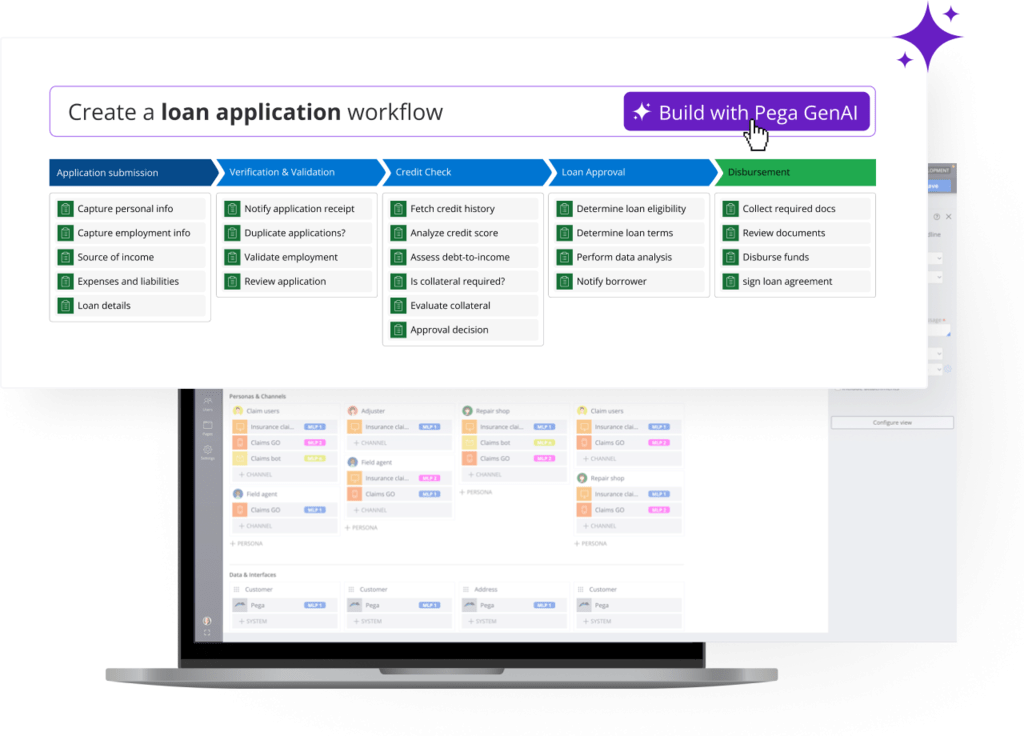
[00:19:37] Shelia Anderson: Yes. So for, for us, we actually were leveraging Pega as part of our case management processes already. So we already have a longstanding relationship with Pega. but because I went back to saying we wanted to prove out the specific AI capabilities, leveraging the AWS Transform piece to actually interrogate the 1.5 million lines of code for this specific situation, and then leveraging Pega Blueprint to actually create that workflow reimagined view. So that’s the role where we leveraged Pega to, to play that secondary part around the blueprint.
[00:20:14] Greg Kihlström: Got it. So Blueprint, you were able to e- essentially… and for those that are less familiar with Blueprint, you’re able to-
[00:20:20] Shelia Anderson: Reimagine your workflows. Just think of it as taking your workflow… we were able to almost reverse engineer, if you think about it, so really understanding the embedded COBOL logic and then reimagining that into the workflows of the future- as your starting point. So you feed that into the Pega Blueprint approach.
[00:20:40] Greg Kihlström: Nice. Yeah, love it. Well, a couple, couple things here. what’s been a highlight of PegaWorld for you so far?
[00:20:47] Shelia Anderson: the biggest highlight for me, honestly, is just the knowledge-sharing that goes on and getting-
[00:20:51] Greg Kihlström: Yeah.
[00:20:51] Shelia Anderson: … to see a lot of peers and then, of course, individuals that have worked with me before. I love hearing about what they’re doing. And, for me, I have had the opportunity to work for a number of companies, and one of the big things for me is you always want to leave any company well. So I love hearing their wins as much-
[00:21:07] Greg Kihlström: Yeah.
[00:21:07] Shelia Anderson: … as what, what I’m doing today with, with Unum Group. So that’s really a special part of being able to come and participate and hear all those great stories too.
[00:21:14] Greg Kihlström: Yeah. That’s great. Well, thanks so much for joining. A very last thing for you, I like to ask everybody, what do you do to stay agile in your role, and how do you find a way to do it consistently?
[00:21:25] Shelia Anderson: The way that I stay agile is a lot of participating in conferences like this, staying plugged into my network. I do a lot of networking in the CIO community so that we’re all knowledge-sharing around what’s coming, how are we solving for it, and I do regular sessions, group sessions usually, and stay current with that. I do a lot of reading. I listen to a lot of podcasts. I listen to yours and so I, I stay current in that way. It’s important.