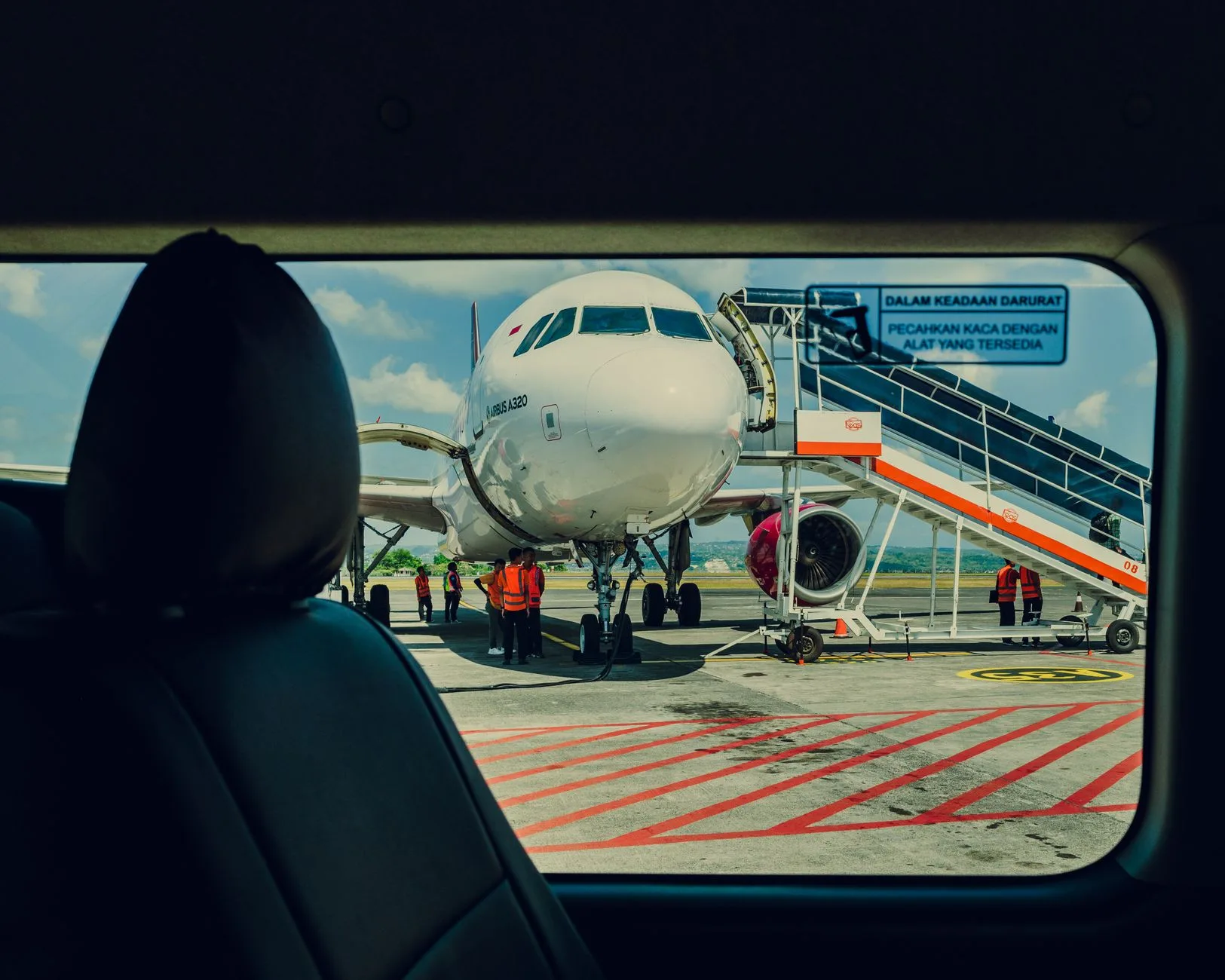
New research from Parloa shows consumers trust AI to watch their trips, want full resolution above all else, and are increasingly willing to let AI agents negotiate with a provider’s AI, with openness rising sharply among younger travelers.
Most U.S. travelers are heading into the holiday season already expecting something to go wrong, and relatively few trust airlines, hotels, or booking platforms to fix it when it does. That is the headline from a new consumer survey published by Parloa, the AI agent management platform vendor, which polled 1,000 U.S. adults on how they feel about travel customer experience and where AI fits into it.
The findings describe a customer base that is pessimistic about service, selective about what it will hand to AI, and largely indifferent to who, or what, solves the problem as long as it gets solved.
Disruption is the baseline expectation
According to the survey, 62% of respondents expect at least some disruption or customer service issues this holiday season. Among those who expect trouble, only 27% trust travel providers to resolve it.
Parloa frames that trust gap as part of a longer-running pattern. More than half of respondents (56%) said their confidence in airlines, hotels, and booking platforms to deliver a smooth, reliable experience is unchanged or lower than it was a few years ago. The company’s chart data puts the split at 36% who feel more confident versus 31% who feel less confident, with the remainder reporting no change.
For CX and marketing leaders in travel, the practical reading is that the service experience is being evaluated against a low bar going in. Customers are not expecting to be delighted; they are expecting to be inconvenienced and then left to sort it out themselves.
AI for monitoring, not yet for action
The survey’s second finding draws a sharp line between what consumers will let AI observe and what they will let it do.
Just over half of respondents (53%) said they would use AI for holiday travel in some form. But the dominant use cases are passive: monitoring plans, receiving disruption alerts, comparing providers, and generating destination ideas. Only 7% said they would use AI to actually take action during a disruption, such as rebooking or resolving an issue on their behalf.
Parloa describes this as consumers using AI “to keep eyes on the things they can’t monitor every day, and to do a little extra thinking for them,” while stopping short of putting AI agents into action.
That hesitation is strongly correlated with age. Interest in using a personal AI agent to manage disruptions was reported by 44% of Gen Z and 41% of Millennial respondents, compared with 27% of Gen X and 14% of Boomers.
Agent-to-agent interaction finds an audience
The generational pattern holds, and widens, when the question shifts to agent-to-agent interaction, where a traveler’s personal AI agent communicates directly with a provider’s AI agent.
Openness to that scenario was reported by 77% of Gen Z, 71% of Millennials, 60% of Gen X, and 35% of Boomers. A further 19% of respondents said they would rather let the two agents work it out than deal with customer service themselves.
The survey also surfaced a notable contrast with the 7% figure. When asked about top use cases for the technology, 32% of respondents placed using personal AI agents to take over CX interactions when something goes wrong near the top of the list. And 42% said they would let their agent work with an airline’s or hotel’s AI agent, provided they could still approve important decisions.
The company’s interpretation is that consumers become more willing to delegate to AI specifically when the alternative is a frustrating experience. The human-in-the-loop condition, where the traveler retains approval over consequential choices, appears to be the mechanism that makes delegation acceptable to a broader group.
For enterprise CX teams, the agent-to-agent numbers are worth attention beyond the travel vertical. If a majority of under-45 consumers are already open to their own AI intermediary dealing with a brand’s AI, the design question shifts from “will customers accept an AI agent?” to “how does our agent behave when the customer isn’t the one talking to it?”
Resolution matters more than who provides it
The third finding addresses how consumers react when a provider routes them to AI today, and what determines whether that interaction builds or erodes trust.
Parloa reports that 60% of respondents react positively or with an open mind when routed to AI, and 15% see it as potentially faster and easier. When asked what they would think if a travel provider sent them to an AI agent for help, 21% said AI could work well if it fully resolves the issue, and another 24% said they don’t care who helps them as long as the problem gets resolved.
The clearest signal is in what drives trust. Nearly half of respondents (46%, per the company’s chart data) ranked full resolution as the most important factor in trusting AI-powered customer service in travel. The next-highest factor, the ability to reach a human, was cited by 15%.
In other words, the escape hatch to a human agent matters, but it matters far less than whether the AI actually finishes the job. That ordering has implications for how travel brands measure AI performance: containment and deflection rates say little about whether the customer’s problem was solved, which is the metric the survey suggests customers are actually using.
Parloa’s framing and what to keep in mind
Parloa positions the findings as a case for agentic AI in travel service, citing a separate figure from its Consumer Patience Index that 83% of U.S. consumers tie brand loyalty to their support experiences. The company’s conclusion is that while providers cannot control weather or mechanical delays, they can control what happens when a customer needs to rebook, and that proactive, fast, full-resolution service is the opportunity the holiday season presents.
Readers should weigh the source accordingly. Parloa sells AI agent infrastructure to contact centers and has a commercial interest in the conclusion. The survey was conducted with Dynata, a recognized panel provider, among 1,000 U.S. adults aged 18 and older in Q3 2026, which is a reasonable sample for directional consumer sentiment. The published post does not include full question wording, margin of error, or demographic weighting details, so the generational breakdowns in particular should be treated as indicative rather than precise.
That said, the core findings align with a pattern visible across the broader CX research landscape: consumers are not opposed to AI in service, they are opposed to AI that does not resolve anything. For marketing and CX leaders planning holiday-season service capacity, the survey offers a usable framework: expect customers to arrive braced for problems, give them AI tools they can watch rather than tools they must trust blindly, keep a human approval step for consequential decisions, and measure success by resolution rather than deflection.
The full findings are available on Parloa’s blog.