In this episode
Taksina Eammano, EVP and GM of Agentforce Field Service at Salesforce, explains why enterprise AI investment proves out or falls apart in the last mile of service, where a technician has to act on it in front of the customer. Her central point is that executives treat go-live as the finish line, while for the frontline worker it is day one. From there she covers why technicians lack the asset, parts, and history data they need on site, why first-time fix rate matters more than closed-ticket volume, and why organizations that apply AI to a poorly designed process only scale their errors. She grounds the discussion in three customers: Unisys, Luminator, and The Grout Guy.
Key takeaways
- Go-live is day one for the technician, not the finish line. Executives often consider an AI deployment done once it ships to the field; for mobile workers that is when they start using it, so adoption work begins at launch.
- Field AI should remove administrative work around the job. AI won’t fix a hole in a roof. Its value is in handling the scheduling, lookups, and back-office tasks that surround the repair, and each use should be judged on whether it solves the technician’s job to be done.
- Small time savings compound at field scale. For customers running around a million appointments a year, saving five minutes per job is measurable ROI and can free enough time to fit in additional jobs.
- The technician is the last mile of the brand. A company can spend $10–20 million on a brand campaign and undo it in 30 seconds when the person at the door has no context, the wrong equipment, or can’t solve the problem. Much of that work is done by contractors wearing the brand.
- Technician data gaps come from disconnected systems. Asset history, manuals, parts, supply chain, and order data sit outside CRM. Salesforce research cited in the episode found 61% of organizations say mobile workers have limited data access.
- First-time fix rate is the core field service KPI. Rolling a truck costs roughly $150–$200 in the US, so avoiding a second visit matters. Callback prevention is a better signal than ticket closure; customer retention and lifetime value after an incident matter most and are hardest to attribute.
- AI improves data quality as a byproduct. Voice-to-form lets technicians complete service reports by talking instead of typing in the driveway, which gets jobs to billing faster.
- Automating a poor process scales the errors. Organizations getting returns, like Unisys and The Grout Guy, had the process and data foundations in place first; AI accelerated what already worked.
- Humans stay for repair, judgment, and customer relationships. Mobile workers lose about seven hours a week to administrative tasks that AI can remove, while drones and autonomous tools take on dangerous inspections.
Chapters
- 01:00 — The question: what happens when AI ambition outpaces the frontline
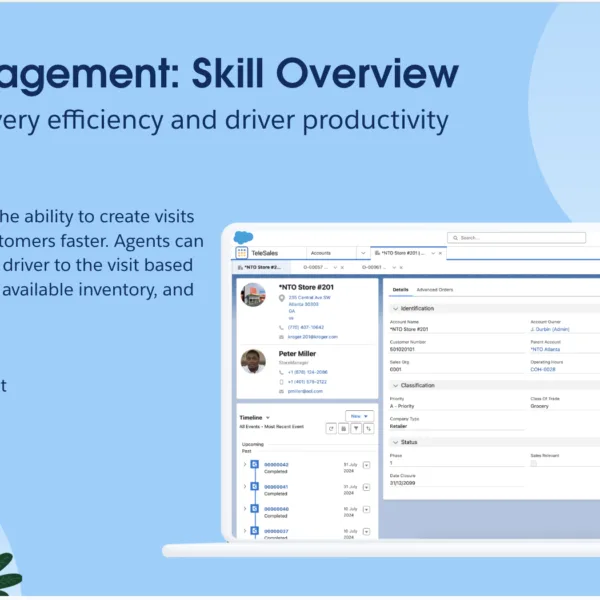
- 02:57 — What Salesforce Field Service does
- 03:26 — 95% of organizations use AI, 66% report rising mobile worker turnover
- 05:00 — Why go-live is day one for technicians
- 06:11 — From predictive to agentic AI in the field, and the value of five minutes
- 07:14 — The technician is the brand
- 09:04 — How a $20M brand campaign gets undone at the door
- 11:07 — Why 61% of organizations report limited data access for mobile workers
- 14:05 — Luminator: IoT signals and first-time fix rate
- 14:54 — Measuring AI ROI beyond ticket volume
- 17:21 — Truck rolls, callbacks, and post-incident retention
- 19:31 — Voice-to-form and better service data
- 20:47 — What organizations getting AI right did first
- 21:35 — Unisys: 70% auto-scheduled, 95% first-time fix
- 22:49 — The Grout Guy: 40% revenue growth without adding headcount
- 24:57 — Why AI on a clunky process creates errors faster
- 25:46 — Where humans stay in the loop
- 28:55 — How Taksina stays agile
Why does AI stall between the strategic decision and the technician?
Salesforce research cited in the episode found 95% of organizations are using AI, yet 66% report increased mobile worker turnover, with insufficient training on new technology among the top reasons. Eammano says the break happens because leaders treat deployment as the end point. For technicians it is the first day of working with the tool, and the question is whether AI is placed inside the workflow in a way that makes the job easier, or whether it is just another software rollout.
Why the technician is the brand
Customers don’t separate the person who shows up from the company that sent them. That person arrives in the brand’s shirt, jacket, or truck, and for many organizations that person is a third-party contractor. If they arrive without context, can’t see the customer’s plan, or have to come back, the customer concludes the brand doesn’t know or prioritize them. Organizations that get this right connect roles like the chief digital officer and customer experience officer so service stays consistent from the contact center to the home. When it works, technicians become trusted advisors who can recommend maintenance plans and upgrades, which Eammano’s customers describe as revenue in the field.
Why field workers can’t see the whole picture
Eammano says most organizations don’t treat marketing, sales, support, and field operations data as connected. Technicians need more than contact and warranty details. They need asset repair history, dispatch windows, current manuals for new products, and parts data from product, supply chain, and order management systems. Luminator, which makes bus signage and runs about 1,000 technicians handling some 40,000 maintenance tickets a year, uses telemetry from bus stops and yards to diagnose issues before a visit and complete the repair on the first trip.
What to measure instead of ticket volume
A closed ticket can look like success until a callback arrives three weeks later. Eammano points to first-time fix rate and callback prevention as measurable signals, with truck rolls costing $150–$200 each in the US. The harder metrics are customer retention and lifetime value after an incident, which reflect what she calls effortless service delivery. She also sees a shift toward revenue in the field: validating warranty status on site, taking payment immediately, and making offers while the technician is still with the customer.
What Unisys and The Grout Guy did before deploying AI
Unisys operates in 120 countries with 7,300 technicians, manages more than 7 million assets, and handles close to a million service appointments a year. About 70% of scheduling runs without a human in the loop, built on detailed rules about technician certification, skills, and asset history, and pre-work briefings help it reach a 95% first-time fix rate. The Grout Guy, a regional grout repair provider with a few hundred technicians, used an AI agent for after-hours response and lead callbacks. It moved from one dispatcher per four technicians to one per 25, cut B2B scheduling from days to minutes, and grew revenue 40% without adding headcount. In both cases, Eammano says, the business understood its process first and used AI to accelerate it.
Where humans stay in the loop
Eammano says field operations will always need people for the repair itself, for complex judgment, and for long-term customer relationships. What should disappear is the administrative load: scheduling that takes 12–15 minutes by hand and roughly seven hours a week technicians spend on admin. She also sees AI orchestrating when to send a person versus a drone or autonomous robot, especially for dangerous inspections such as utility poles.
FAQ
What is the gap between AI ambition and frontline readiness in field service? Salesforce research cited in the episode found 95% of organizations use AI, but 66% report increased mobile worker turnover, with insufficient training on new technology a leading reason. Taksina Eammano says leaders treat go-live as the finish line when it is day one for technicians.
What is the most important KPI in field service? First-time fix rate: resolving the issue on the first visit. With a truck roll costing roughly $150–$200 in the US, avoiding repeat visits and callbacks is a direct cost and experience signal.
Why don’t field technicians have the data they need? The data they need, such as asset history, manuals, parts, and dispatch windows, sits in product, supply chain, order management, and dispatch systems that aren’t connected to CRM. Salesforce research found 61% of organizations say mobile workers have limited data access.
How should organizations measure AI ROI in field service? The easiest measure is time saved per job, which compounds at scale. Stronger signals include first-time fix rate and callback prevention, and the hardest but most valuable are retention and customer lifetime value after a service incident.
Will AI replace field service technicians? No. Eammano says humans remain essential for repairs, complex judgment, and customer relationships, while AI removes administrative work and drones or robots take on dangerous inspections.
What happens when AI is applied to a poor process? It automates a bigger mess. Eammano says AI on a clunky process creates more errors at scale, faster, so organizations should redesign workflows and roles before layering agents on top.
About Taksina Eammano
Taksina Eammano is the Executive Vice President & General Manager of Field Service at Salesforce. She is responsible for the overall strategy and vision, product and innovation narrative, and financial performance of Field Service.
———- Resources ———-
Salesforce: https://www.salesforce.com
The Agile Brand podcast is brought to you by TEKsystems. Learn more here: https://aglbrnd.co/r/2868abd8085a9703
The hardest part of martech right now is telling which tools are actually earning their keep. That’s the question running through the MarTech Summit Boston agenda on October 27. We’re attending MarTech Summit Boston on October 27 as a media partner. If you want to join, the code AGILE15 saves you 15%. https://aglbrnd.co/r/c70c250b8d52dff3
We’re proud to be a media partner for #MAICON26 – Oct. 13-15! Learn how AI can power your marketing and business and help you grow smarter. Use code AGILE150 to save! https://aglbrnd.co/r/7fe458ced0f04658
Need to evaluate martech, AI, or CX platforms and don’t know where to start? The Agile Brand Guide List is now in beta. We’re building the most useful, free-to-use, and up-to-date way to assess what truly matters when evaluating platforms. See more here: https://aglbrnd.co/r/f76be3a33cc491bb
Reach your customers with Reddit. Spend $500 in ad spend, get $500 back in ad credit! Learn more: https://aglbrnd.co/r/491818c79fb1873f
Chaser is the only Slack-native project management platform that helps teams turn messages into tracked tasks, automate follow-ups, and maintain team-wide visibility, without adopting another tool. Now integrated with Claude and other GenAI tools. Learn more at trychaser.com and use code AGILEBRAND for a 3-month free trial (normal trial is 14 days).
Start building your own apps with Replit and get $20 off. Learn more: https://aglbrnd.co/r/93531742a7625a20
Enjoyed the show? Tell us more and give us a rating so others can find the show: https://aglbrnd.co/r/faaed112fc9887f3
Connect with Greg on LinkedIn: https://www.linkedin.com/in/gregkihlstrom
Don’t miss a thing: get the latest episodes, sign up for our newsletter, and check out Martechipedia, the wiki for marketing technology: https://aglbrnd.co/r/35ded3ccfb6716ba
The Agile Brand is produced by Missing Link—a Latina-owned strategy-driven, creatively fueled production co-op. From ideation to creation, they craft human connections through intelligent, engaging and informative content: https://aglbrnd.co/r/f1782ab12211f765
Transcript
[00:01:00] Greg Kihlström: Hi, I’m Greg Kihlström, host of the Agile Brand, and here’s a question for you. What happens when an organization’s AI ambition moves faster than its frontline’s ability to absorb it? Agility isn’t just deploying new technology quickly, it’s whether the people and processes closest to the customer can change alongside it without the experience coming apart at the seams. Today we’re going to talk about the friction between enterprise AI deployment and frontline readiness, and why the last mile of service is where AI investment either proves out or quietly falls apart. We’ll get into what actually breaks between a strategic AI decision and the moment a technician actually has to use the thing? To help me discuss this topic, I’d like to welcome Taksina Eammano, EVP and GM of Agent Force Field Service at Salesforce. Taksina, welcome to the show.
[00:02:47] Taksina Eammano: Thanks, Greg. We’re excited to be here to have this conversation.
[00:02:50] Greg Kihlström: Looking forward to diving in. Before we do though, why don’t you give a little background on yourself and your role at Salesforce?
[00:02:57] Taksina Eammano: So I lead our field service product line, here. It– Simply put, we build the software that gets somebody out to your house to do repairs, and so it’s everything from scheduling, optimizing somebody when, you have an issue, finding the right technician or mobile worker to get into the field, and then the mobile app that really they do work and perform work on. So, we get there on time with the right tools and parts. That’s how I like to think about it.
[00:03:26] Greg Kihlström: Love it. Love it. Let’s, so, let’s dive in, definitely, and we’re, we’re gonna talk about, many, many of the opportunities as, as well as a few challenges with, with that part as well. So I wanna start with talking about what I kinda teed up in the intro, the– just this gap between AI ambition and frontline readiness. And so Salesforce has a recent report that highlights pretty significant gap. ninety-five percent of organizations are using AI, yet sixty-six percent report increased mobile worker turnover, citing things like insufficient training on new tech as, as one of the top reasons. From a leadership perspective, what’s breaking down the decision to deploy and the moment a techno-
[00:04:11] Greg Kihlström: a technician actually has to use the thing?
[00:04:15] Taksina Eammano: Like right now I think AI is giving us a boost in productivity everywhere, and so, as all of us are learning and exploring together, I think that’s no different to the frontline worker. I think the frontline worker’s role is very different. Obviously, we– many of them need to be hands-free. They need their ha- like, their tools. They know the job well, but they need a lot of administrative work, that happens, the scaffolding that gets them to that job. like say like AI is not gonna fix a hole in your roof. We still need our people, our plumbers, our, technicians out in the field, our healthcare workers, et cetera. a lot of what I see from our executives today
[00:05:00] Taksina Eammano: is that, the go live is when you finish and you deploy it out to the field, and I think that for technicians and mobile workers, that’s day one for them. That the reality is like that’s the start of their day. There’s the– of, of leveraging the, the, the tools and technology. And I think so when we think about like how we’re going to bring AI for AI’s sake in there into a workflow, it’s really about does it solve the job to be done for our end user? And, are they really leveraging AI as part of the workflow? Is it additive or is it really just part of like rolling out software in general? And I think that’s what people are seeing right now is like how we’re putting it very thoughtfully
[00:05:45] Taksina Eammano: into the application so it’s seamless, so it makes it easier for us to complete work very quickly. Things that a technician, for example, struggle with out in the field. So when, when we’re b- embarking on like how we prioritize for customers today- The first thing that came to mind, we, we’ve been doing AI in many different ways in field service in the past, right? How you optimize a schedule, how you can recommend parts-
[00:06:11] Taksina Eammano: … et cetera, very predictive AI. But in this moment of generative AI and now being able to now, like agentic AI, that action and reasoning that what should I do, what work happened before, can completely change. And so now I can listen to the job I’m going to while I’m on the drive. Ah, when I’m out in the field, a frontline worker can leverage that AI to look up information, get to the back office, complete the job so much more quickly. So if you’re doing something like a million appointments a year, for some of our customers, five minutes savings, that’s real metric and ROI.
[00:06:50] Taksina Eammano: It’s the difference between actually getting you an outcome for a customer whereby you could slot in an entire another job because you’ve saved time on the administrative work. So I think that’s the biggest decision and d- d- distinction is, like, where are you putting in the context of AI? Everyone is moving towards it, but how is it additive and really changing the productivity of your end user?
[00:07:14] Greg Kihlström: Well, and, and to that point, we’ve got a lot of marketers listening to this show that are spending, that are using AI in ways to acquire customers and create content and all of those kinds of things, but, I think it’s always important to remember that a customer doesn’t separate that technician, to, to use that, one of those examples, they don’t separate that technician from the brand. whatever happens during that visit, that’s the brand behaving, even though it’s, somebody fixing their cable or whatever the case may be. So when a field worker doesn’t fully trust what the system’s telling them, what does the customer end up seeing and, and experiencing?
[00:07:57] Taksina Eammano: Well, we’ve all been there, haven’t we, Greg? Like-
[00:08:00] Taksina Eammano: … you call, you tell the contact center your problem, and then somewhere between, even if you get a schedule correct and someone comes out to see you, that the person who arrives has no context, and they, don’t have the right equipment, and then they, can’t solve it, the problem then and there, whether it’s an installation, a fix, et cetera. They turn up in the brand. They turn up in the polo shirt, the jacket, or whatever it is that they’re, or the truck, the vehicle, and they represent you. For so many organizations, that frontline worker is that last mile of the brand representation. And in fact, for many organizations, that’s also done by a contractor and third-party
[00:08:45] Taksina Eammano: network as well representing that-
[00:08:47] Taksina Eammano: … organization brand, so to, for their global distribution. and so think about how you have to launch a consistency of that brand and service from the contact center all the way through, and it’s probably from the marketing side and your brand for the entire, like, life cycle-
[00:09:04] Taksina Eammano: … of that customer’s relationship with you, that you spend, you could spend, 10, 20 million on a brand campaign, and your brand could be destroyed in the 30 seconds when they come to your site and your home to deliver the product, to install it, to repair it. And that, I think, that brand erosion we often forget. Now, organizations that do this well actually combine, for example, their head of, their chief digital officer, their customer experience officer, who has all of this connected, and I think that’s where consistency of brand really shows up, because you’re, you know what it’s like when the person who turns up to your house, they don’t have the information. They don’t know how much your customer is. They don’t know if
[00:09:49] Taksina Eammano: they can upgrade you to the next plan. They’re like, “I’m gonna come back.” And those are all the things that, when you explain to them, “Well, my system, that’s a back-end API that’s, like, causing a problem with my latency.” Like, no one ever says that. Says no one ever.
[00:10:05] Taksina Eammano: Right? And so they don’t know that. What they know is that you as the customer and the brand who’s turning up, that brand doesn’t know who I am, hasn’t prioritized me, and, can’t solve my problem right away, and I think that brand loyalty does exist in there. Those who get it right know what they need to arm somebody who is that trusted person out in the field, and we’re seeing this more and more that that frontline worker is that trusted. If they do a really great job, they’re the best person to give you a recommendation on how to maintain the product.
[00:10:40] Taksina Eammano: If they would upgrade the product, what other additional white glove services you might want to have, whether it could be ongoing maintenance or, putting you on a care plan. All of those things could be possible, and many of our customers talk about this as transition to revenue in the field because they have that trust. When it lands well, you know that you want their advice from the person out in the field.
[00:11:07] Greg Kihlström: so I wanna talk a little bit about why, certainly [laughs] I have very recently experienced some, some of the things that you speak of, and definitely the lack of, of data and access. Your research points to, 61% of organizations say that mobile workers have limited access to what they need, pointing to, to what you were just saying of, like, if they did, how much could they help? Is this a data problem? Is it a permissions and ownership problem? what, what’s the first thing that you would advise a leader to fix to, to try to solve this issue?
[00:11:48] Taksina Eammano: I, I, I, I love that we do this report because, we survey thousands of, fo- customers and, and really sort of get the ground truth of where people are struggling, right? And to your point, like, 61% of those orgs do say that there’s just limited, limited data access. I don’t think organizationally many customers think about these, as connected data systems in the same way. So we have traditionally, we market to a, a… We have a marketing organization, then we have a sales organization if it’s B2B, then we have a customer support organization, and then one of the resolution items might be the servicing side, which is in the field
[00:12:33] Taksina Eammano: operations.
[00:12:34] Taksina Eammano: And all of those places where we talk about the empowerment of having CRM data in lots of different places, but it’s more than that. Now, what we see customers want, out in the field, more than just being able to contact the customer or know what warranty they have, it’s about the asset data that they already have, which sits in other systems. Like when was this repaired previously? They’ve got like he- a, a dispatch system that maybe is dispatching contractors separately, so we don’t know what’s going on, and we need access to the time slots and the windows. but there’s a lot of data that they’re missing to complete the work, and that could be down to, we’ve got lots of really
[00:13:20] Taksina Eammano: great new products getting installed. Let’s think about a camera that you’re just gonna install now. So much new tech that’s coming out. Do I have the newest manuals? Do I have the information? how does it get repaired? What’s a part that is an OEM part or maybe, a generic part that I would… could use instead? All of this data sits in product systems. They sit in supply chain systems. They sit in order management systems, and that is actually where we struggle to bring all of that data to one place to make it incredibly valuable for, a technician to be armed with that in the field. and so we talk a lot with customers around like telemetry, IoT signals
[00:14:05] Taksina Eammano: that can help me di-not- diagnose beforehand and then when I’m on site know how I can do that repair. So take Luminator, for example. They make, bus, signage in transport, and they’re a customer. They’re a thousand technicians. They do about 40,000 maintenance tickets a year.
[00:14:25] Taksina Eammano: But they also get all the signals from these bus stops, bus yards, et cetera, that, can give you information to do the repair more valuably. Connecting these signals make it very efficient out in the field to complete that job. That’s the, that’s really the signal. Is it first time fix rate? Can I get it in there as soon as possible? And I’ve repaired it, first time fix. That’s the, that’s the ultimate KPI for a lot of field operations folks.
[00:14:54] Greg Kihlström: [gentle music] That measurement component is… certainly we, we talk a lot about this on the show as well. It’s just that the pressure as well as the struggle to measure ROI just in general, but I think the pressure to, to measure AI ROI, [laughs] to just use a lot of acronyms. I think your, your research showed 40% of leaders are, are really struggling here to, to measure that ROI from their AI investments. There’s certain things that are easy to count, relatively speaking, ticket volume, resolution time, there, there are systems in place to be able to do that. You
[00:17:12] Greg Kihlström: touched a little bit on this, but I wonder, y- what’s, what’s possibly harder to count but that might matter more?
[00:17:21] Taksina Eammano: I, I think in field operations people do count first time fix rate. So generally, like in the US, for example, on average, it costs like $150 to $200 to roll a truck, right? So knowing that you don’t have-
[00:17:33] Taksina Eammano: … to roll a truck-
[00:17:35] Taksina Eammano: … i- because we know what the problem is, or we don’t have to roll a truck p- truck twice, like that is a, a real signal and metric. a callback prevention. So even though we get the volume, we close the ticket. Yep, great, on site. On s- the surface could be a very s- good signal that we’ve closed it, but there’s a callback three weeks later. It didn’t fix the problem or I need, something else as something else has happened. So I think those are like metrics that you can measure. I think the harder ones to measure is really about customer retention post an incident. And so, we have CSAT and NPS scores, et cetera, that we sort of can measure against. But, like, that customer lifetime value, because
[00:18:20] Taksina Eammano: you had a great service experience, ’cause it was simple and easy to install, I wanna go back to that same person again. Like, those are those metrics that create, the ease and simplicity, I call it effortless service delivery, that, can be really defining for a brand, and those are the ones that are harder to track and attribute to. I see a trend that is also happening, which is this move to more revenue. So in the field, how can I generate more revenue, whether I can upsell you, I can create a new lead, et cetera. Can I take payment right away? I validated that this is out of warranty, so therefore I’m gonna bill you right away. These are the pieces of revenue, ROI,
[00:19:06] Taksina Eammano: that make it very valuable. And so when you talk about AI and the impact of how you measure it, the easiest way to measure it is how much time am I saving you? Can I, like, eliminate the amount of time that I complete a job? One of the other ways that I- we’re seeing in a byproduct of h- leveraging AI for technicians is the quality of your data has improved.
[00:19:31] Taksina Eammano: ‘Cause none of us really wanna complete-
[00:19:33] Taksina Eammano: … forms. None of us wanna sit there on our mobile device and enter in a post summary, sit awkwardly in the driveway, and, like, complete the-
[00:19:44] Taksina Eammano: … the, the service report so we can get an invoice. However, that’s exactly the kind of metric that allows us to say, “Hey, voice to form,” which is a capability that we have in the app, allows me to walk, talk, complete everything that I need to do, out in the field so that I can get to billing much faster.
[00:20:05] Taksina Eammano: I can use AI to validate while I’m still with the customer, are they under warranty, what should I charge for, what is the premium price that they would normally pay for this at, what are some offers I can offer that could give them a deal that they could execute now? That is the power that has never been available before without a lot of development, a lot of custom development. So we’re sitting in a moment where these agents are like a teammate in your pocket, the back office, your marketer, your, procurement person. Like, I can order things very quickly, and those agents are sitting in the palm of a frontline worker, so they can be that trusted person when they’re out in the field.
[00:20:47] Greg Kihlström: Well, and, and certainly, I know, I know we’ve talked about some of the challenges here, but to, to, to that point, y- 57% of organizations, according to the, the research, using AI-powered scheduling, for instance, report higher revenue and productivity, kind of touching on, on what you just mentioned.
[00:21:06] Greg Kihlström: Clearly, when it’s used well, there are, there are, there are returns. So what’s the common thread of those orgs that are getting it right, and how much of it comes down to work they did before the technology was ever deployed? And, what, what is, what is success? how, how do, how do these organizations achieve success?
[00:21:29] Taksina Eammano: well, I got two stories for you because I think they’re almost like tales of two different industries and sizes-
[00:21:35] Taksina Eammano: … of organizations. if you think about, Unisys, they’rere a large global IT services organization. When Dell needs, to have a server fixed, for example, Unisys is one of their providers that do that. 120 countries around the world, 7,300 technicians. I think they manage, like, s- north of 7 million assets globally.
[00:22:00] Greg Kihlström: Wow.
[00:22:01] Taksina Eammano: They do a great organization. A y- In one year, they do almost close to a million, service appointments. They’re using automation for scheduling where 70% is automatically scheduled without a human in the loop, right? And so but to get there, you need really great data. You need a great organizational rules and structure around who should you send, which technician, how are they certified, what are they skilled at, what machine is getting there before, what have we already fixed? Like, that’s a lot of, like, systematic logic, so that’s, like, data that really makes it powerful for you to make decisions quickly. And with all that information, they really leverage, like, pre-work briefing, so when they get on site,
[00:22:46] Taksina Eammano: 95% first-time fix rate.
[00:22:48] Greg Kihlström: Hmm. Wow.
[00:22:49] Taksina Eammano: That’s incredible statistics for someone who is in there. No, it has really transformed their business and why they’re a market leader in their own right. And so they’re l- obviously a very large organization who are doing it well. on the other side, you’ve got The Grout Guy, and they are a regional provider of grou- grout repair. So I think in the US we call it caulking.
[00:23:14] Taksina Eammano: Versus grout. But in Australia-
[00:23:16] Taksina Eammano: … we call it grouting. and, they have organically grown and, have a few hundred technicians being able to do, like, a lot of the caulking that they need to get repaired.
[00:23:29] Taksina Eammano: They’re leveraging AI to create, this as a differentiator. They don’t have enough people to staff all the phones to be able to, to respond to customer requests. And in the servicing business, first one in the driveway who can quote you on the job can get the job.
[00:23:49] Taksina Eammano: We all know that as general stats.
[00:23:51] Taksina Eammano: Like, you, you can be as responsive as you want. So having an agent on the front end of that be able to help you schedule, be able to help you respond to ask questions so that that visit is very valuable, they’re- they went from, like, one p- one-to-four dispatcher ratio to one-to-25 for technicians.Like, really great stats. grew revenue by 40%, so, like- Without any increase in the, the head count and just being able-
[00:24:20] Taksina Eammano: … they’ll talk about this as being, like, a small player, but a differentiator. So what did they, like, didn’t have before or had, like, they understood their business line and they understood where they really wanted to solve the problem, right? What is the highest yield of putting AI in something that is very valuable to them, which was after hours to begin with, like after hours response and then the lead gen callback. And so, like, that sort of space allowed them… They’ve got, Growdy, their AI agent who is responding, for them and, for their B2B customers, they went from days to minutes in getting-
[00:24:57] Greg Kihlström: Wow
[00:24:57] Taksina Eammano: … a schedule out. and so that didn’t mean that they didn’t have, like, I think about what works really well. you have a process in the background, you’re just now using AI to accelerate that. If you have operationally poor processes, all you’re doing is automating a bigger mess. And so this is an opportunity for folks to redefine how their organization should be working and operating. There are new roles, there are new workflows, and I think most organizations who are just trying to agentify a process that is very clunky to begin with, will experience that, like, operational challenge. AI’s just gonna create scale at er-
[00:25:43] Taksina Eammano: more errors at that scale faster.
[00:25:46] Greg Kihlström: Well, yeah, and so I, I do wonder then, how do you… ‘Cause certainly we talk a lot about agentic on, on this show in various, in various ways, and there’s so much that it can do, and yet where do you see the human retaining, staying kind of in, in the decision seat in, in the role and where, where can agentic go? You, I mean, you certainly mentioned two great use cases there, but it’s like, where does the human stay? extrapolating a few years down the road or, or, or, or whatever, where does the human still… Where, where are they still needed in that, in that pl- in that system?
[00:26:28] Taksina Eammano: They… We will always need humans when it comes to field operations in most industries of, like, where we are operating right now. Like I said, like, you can take away a lot of the administrative work. It takes on average 12 to 15 minutes to do a s- to schedule, and there’s still for many organizations, humans who do this and they put it on a board and they have to schedule it. All of that should be eliminated, right? So I think, like, that’s the administrative preparation. technicians and mobile workers out in the field, and this is in one of our other reports, they waste almost, like, seven hours a week on administrative tasks.
[00:27:08] Greg Kihlström: Wow.
[00:27:08] Taksina Eammano: So that can all disappear. Time on tools so they can spend it on the things that really matter, right? Like the high complex decisioning that we need humans to look at, the judgment that we need, building exec- like, really, like, lifelong, like, customer relationships, finding new opportunities at a customer. Like, those are the places where we need humans. They will, we will need humans to do the repair. I think there is a shift for sure around what physical AI can do, too. The world is moving to drones to do safety inspections, so we don’t have to have humans in the loop, where it doesn’t make sense when you’re, having to do inspections of poles in very sort of dangerous areas.
[00:27:51] Taksina Eammano: We can use drones to do that now, and we can use AI to orchestrate whether we send a human versus whether we send an autonomous, like, it could be autonomous cleaning robot or it could be a, a drone for inspection. Those are really great ways to take pictures without having to put humans at risk. Where do we need our humans? For the judgment for things that are still complex, places that there’s, like, undefined and very nebulous ways, but they could be informed with data. So I think that that’s the world that we will continue to operate in for field operations, and, and why AI is just such a great accompaniment to a lot of the work that folks in the field can do, so they can get home safely to have dinner with their kids. That’s really the goal
[00:28:36] Taksina Eammano: for everybody working remotely and, being able to have, some, access in your pocket and in your app to be able to do all of that administrative work.
[00:28:48] Greg Kihlström: Love it. Well, Taksina, thanks so much for joining today. got one last question for you as we wrap up here.
[00:28:55] Greg Kihlström: what do you do to stay agile in your role, and how do you find a way to do it consistently?
[00:29:02] Taksina Eammano: Right now it’s the greatest disruption, I think. It’s the most fun time as a tech- like, a, a technologist at the moment with just all the, which e- which everything, with everything coming in that’s innovative. I think for me, it, it is an opportunity. I love being curious. I think that being curious allows you to ask lots of deep questions, spend time, carve out time to learn. right now there’s a lot of information, so you, I, you have to have a way… I have agents that brief me before the day, the week, what should I know about, et cetera. I think this is a, having your own chief of staff basically to kinda give you that sense of, like, what’s going on in the world around you, the business and the things you care about that are high priority for the business. and then ultimately, we very much believe at Salesforce in the beginner’s mind, as it’s called shoshin. It’s a Japanese term around this and, from Mark and everybody else leads this way, which is we have to disrupt ourselves in this moment where so much change is happening. So staying agile is about just really listening deeply to customers, solving very, very big problems, and being flexible in the solution that gets us there. And so I think that combination allows us to build and iterate fast for what the market needs.