The throughline this week is the widening gap between AI ambition and AI reality—and the unglamorous discipline it takes to close it. Every conversation circles the same uncomfortable truth: adoption is high, but predictable returns are rare, and the difference comes down to process, governance, data, and how you measure success. Tara DeZao makes the case that orchestrating agents end-to-end only pays off when human oversight and lifetime-value thinking keep it honest. Don Schuerman argues that pointing AI at a broken process just gives you a faster broken process, and that the economics have to be forecastable before a CFO will sign off. Matt Kelly brings it down to the foundation, insisting that none of the innovation matters without clean first-party data and a team willing to measure growth in the language of revenue. And because the economics of AI are now a board-level question, this week’s bonus pick zooms out to the industry forces—cost, pricing, and even government intervention—reshaping what any of us can actually build on.

From PegaWorld: Pega’s Tara DeZao on marketing ROI with agentic AI
Recorded live at PegaWorld 2026, this conversation features Tara DeZao, Director of Product Marketing for AdTech and MarTech at Pega, on the shift from generative AI that merely creates content to agentic AI that executes a campaign end-to-end. DeZao frames agents as the connective tissue between making something and putting it into production, walking through how Pega’s new Customer Engagement Studio lets a marketer hand over a brief and have a slate of strategy, creative, and compliance agents take it toward a live, personalized campaign in minutes. She is candid about the failure mode, warning that letting agents run autonomously for too long invites “brand drift” and that a human has to stay in the loop. Her most useful argument is on measurement: clicks and open rates are vanity metrics that tell you about this quarter, while customer lifetime value—powered by adaptive AI that can decide in under 200 milliseconds and treats even non-action as a signal—is the better predictor of sustainable growth, and the right way to think about ROI on something that is constantly learning.
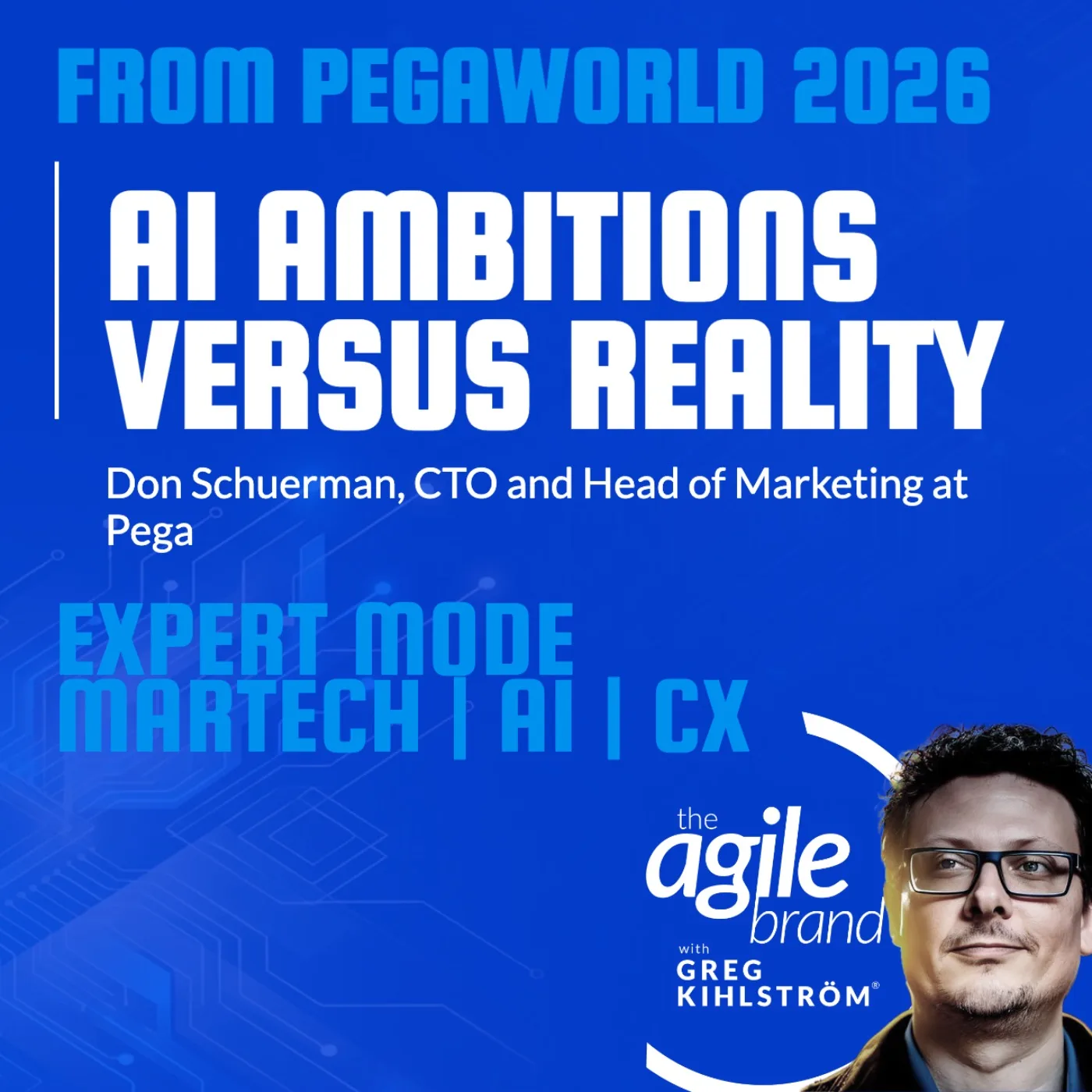
From PegaWorld: Pega CTO Don Schuerman on AI ambitions versus reality
Don Schuerman, CTO and Head of Marketing at Pega, joins from PegaWorld 2026 to confront why AI adoption is sky-high while predictable returns stay stubbornly low. Citing Pega research with Savanta that found 96% of organizations succeeding with agentic AI had first rethought their existing processes, he insists the real unlock is redesigning how work gets done—moving from siloed channel teams to small, accountable squads that can pull in agents—rather than chasing the next model version. He offers a memorable mental model for balancing creativity and control: marketing needs both the “sculptor,” where generative AI conceives ideas, and the “watchmaker,” where fast, explainable statistical models run governed decisions at scale, as Wells Fargo does by using agentic AI at design time and predictable models at runtime. Schuerman also breaks down Pega’s decision to drop token-metered pricing in favor of charging for completed work, a move toward the forecastable economics that lets investment owners predict both outcomes and cost—and a reminder that AI still demands old-fashioned change management to deliver.
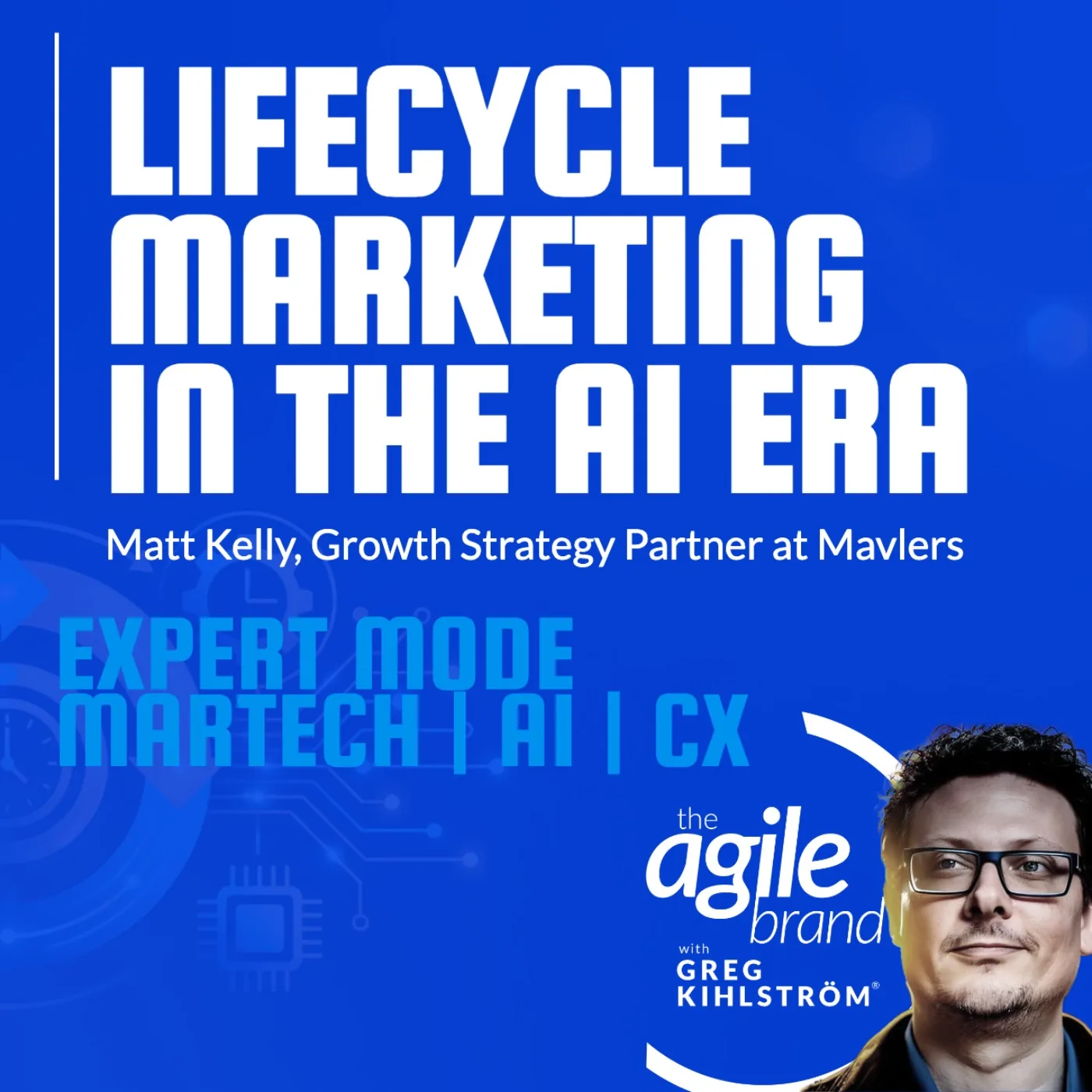
Mavlers’ Matt Kelly on Lifecycle Marketing in the AI Era
Speaking from CRMC 2026 in Frisco, Texas, Matt Kelly, Growth Strategy Partner at Mavlers, makes the case that lifecycle marketing’s AI promise collapses without a solid data foundation underneath it. He identifies two recurring risks: teams building exciting capabilities on top of poorly governed data they don’t fully understand, and a sentiment gap between the “AI-pilled” and the deeply AI-skeptical that stalls projects before they start. Kelly pushes leaders to reframe measurement through a CFO’s eyes—trading open rates and click-through for churn, spend per customer, and lifetime value—because, as he puts it, you can have a 100% open rate and make zero dollars. He also flags a subtler trap in the rush to visualize results: hallucinated analytics dashboards that look like progress until someone asks how anyone knows the numbers are real. On the build-versus-buy-versus-partner question, his answer is that brands should own customer strategy and judgment while treating knowledge transfer—an agency or tool that makes the internal team genuinely better—as the new deliverable worth paying for.
Bonus Pick: [The AI Show Episode 219]: Claude Fable 5, OpenAI IPO, Apple Siri AI Finally Unveiled & Is the Era of Affordable AI Over? — The Artificial Intelligence Show
Hosts Paul Roetzer and Mike Kaput of the Marketing AI Institute and SmarterX deliver their weekly news breakdown, and this installment lands squarely on the economics and governance themes running through the rest of the week. The headline story is a U.S. government export-control directive that forced Anthropic to pull its newly launched Fable 5 and Mythos 5 models from general availability days after release—the first time Washington effectively switched off a frontier model—which Roetzer and Kaput use to ask what businesses are supposed to build on when access can vanish overnight. They also dig into OpenAI’s confidential IPO filing, Apple’s long-delayed Siri AI reveal at WWDC, and a SemiAnalysis study showing just how heavily the labs subsidize their power users, sharpening the question of whether cheap, predictable AI pricing can last. For marketing and CX leaders wrestling with the forecastable-economics problem that DeZao, Schuerman, and Kelly each raise from the practitioner side, this episode supplies the industry-level context that frames those decisions.
Across all four conversations, the lesson is the same: the organizations pulling ahead are not the ones with the flashiest models but the ones doing the disciplined work—reengineering process, governing data, keeping humans in the loop, and measuring in revenue rather than vanity metrics—while keeping a clear eye on the shifting economics and rules of the AI landscape itself. Ambition is cheap right now; accountability is the differentiator. See you next week!